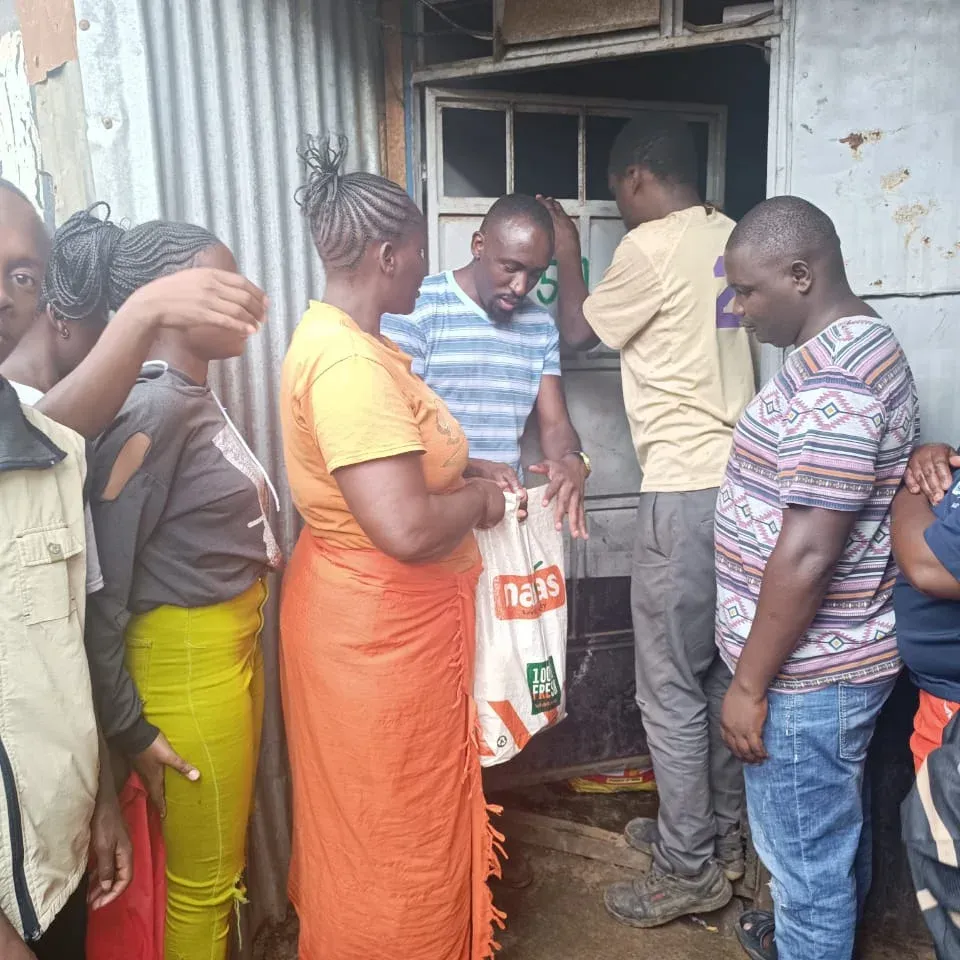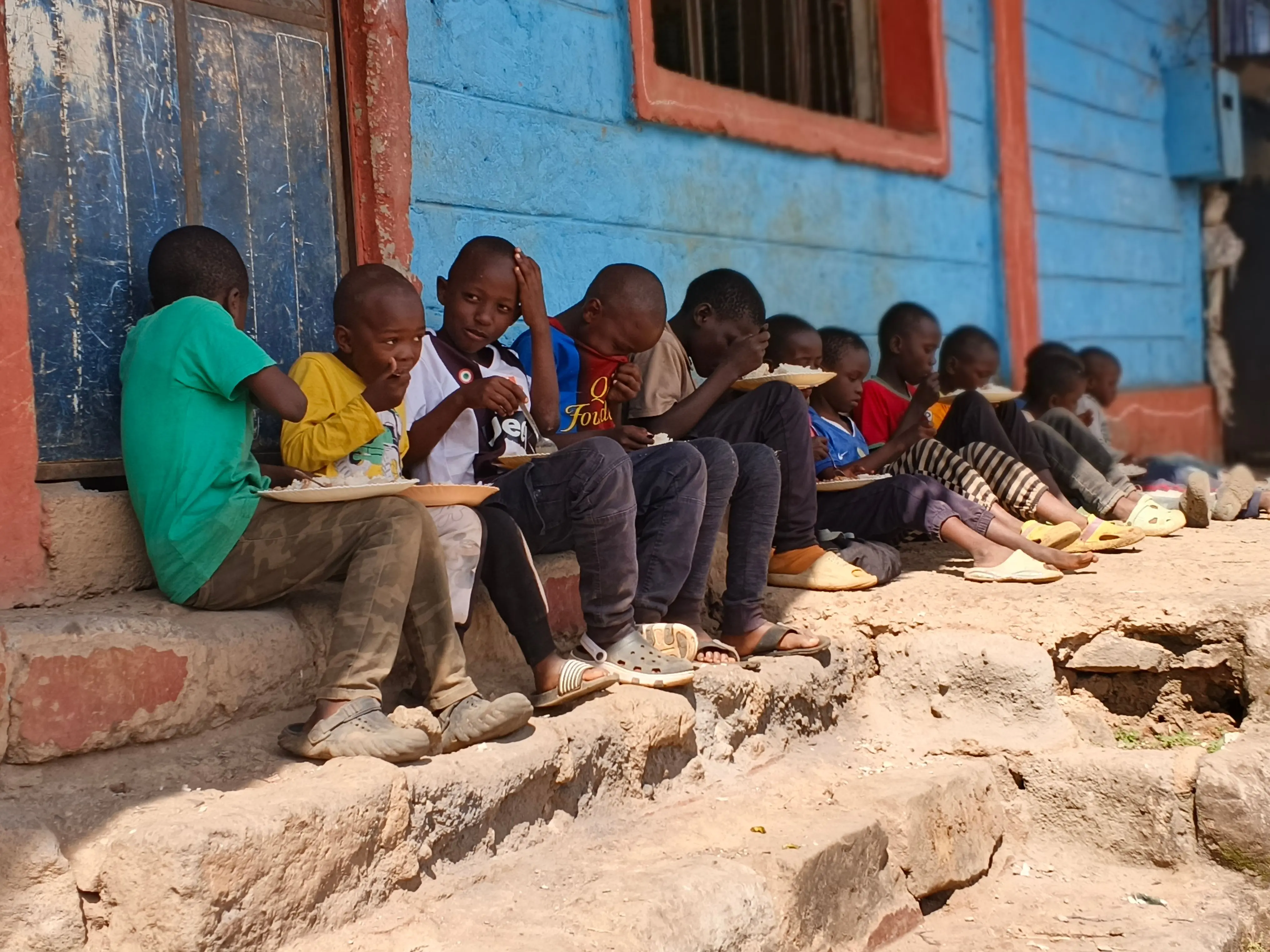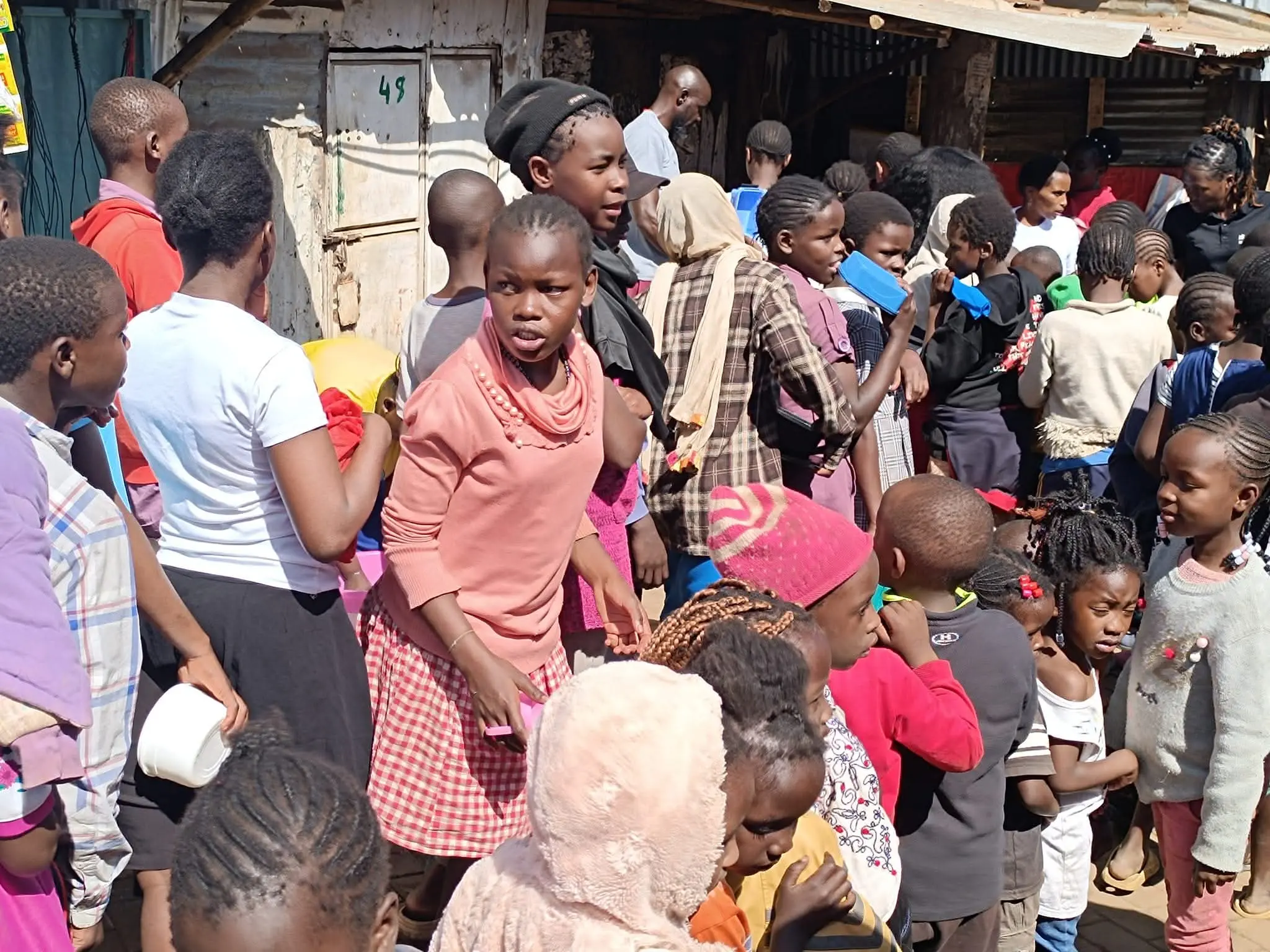
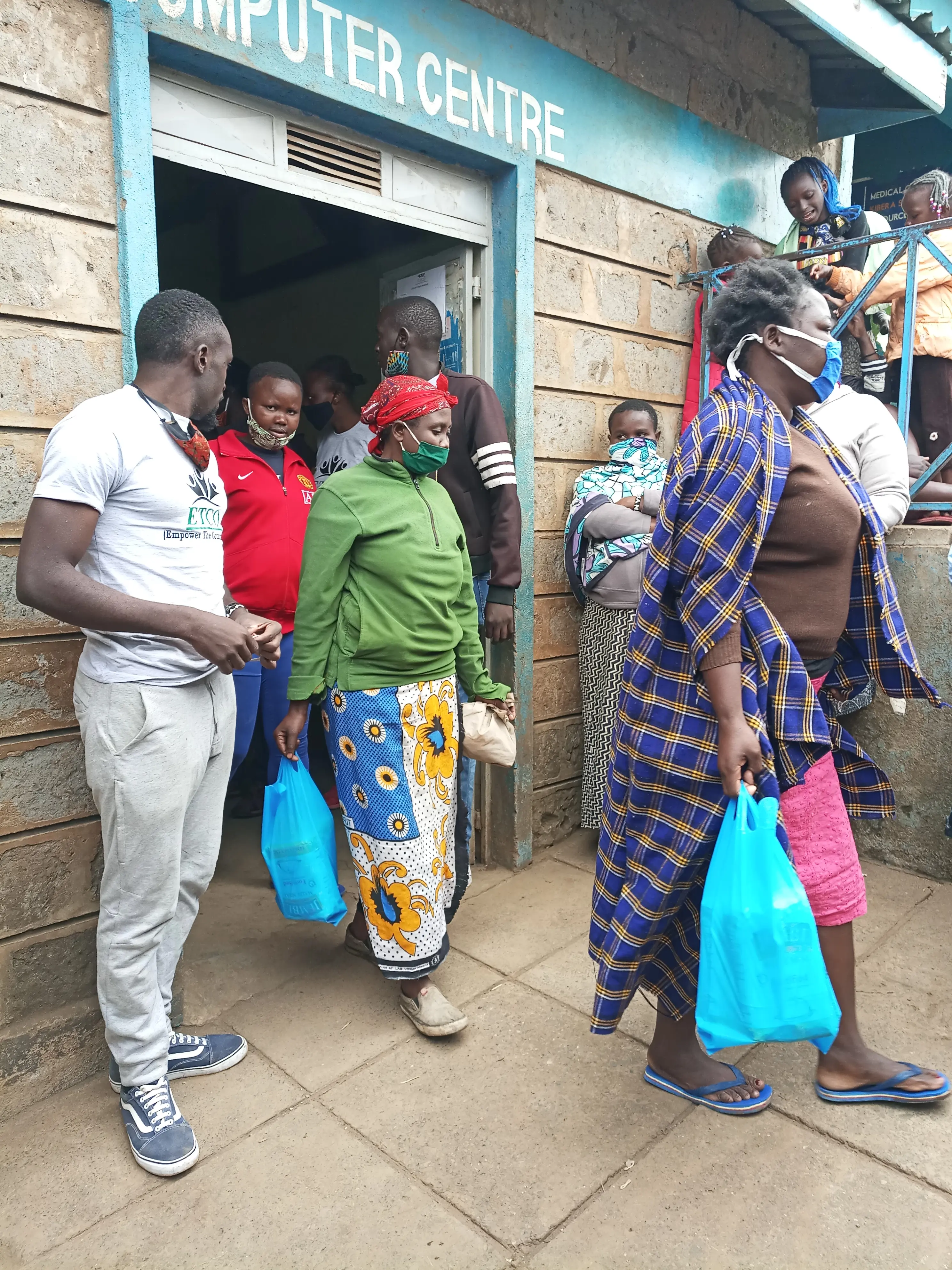
In 2020, when the pandemic pressed hard on work that already paid day-to-day, we channelled food and non-food donations to more than 6,000 people across informal settlements — not as statistics, but as neighbours with names we learned at the door.
Queues formed early; the sun climbed; someone brought a baby on a back, someone else leaned on a stick. We moved bags the way you move furniture in a small house — carefully, with apologies when elbows touched.
Non-food mattered as much as maize: soap so hands could be clean without quarrel, pads so girls could stay in class when schools returned, blankets when June cold slid under doors.
Many families lost jobs overnight; savings barely exist when hand-to-mouth is the honest description. With an average of three people per household, a small sack of maize can stretch into a week of ugali — or fail if illness arrives.
Our Community Health Volunteers walked door to door, mapping vulnerability with neighbourly precision — who is elderly, who is feeding grandchildren alone, who cannot queue for hours.
Before any parcel left our hands, we gathered people for a short session — teaching, listening, sometimes sensitising on hygiene or rights. Dignity is not only what you receive; it is being spoken to before you are handed a bag.
How you can help next
To every donor who sent cash, soap, sanitary pads, or a referral — thank you. If you want to give again, we still need bulk staples, baby soap, and funds for logistics. KSh 500 buys more than items; it buys time until a parent finds the next job.
Referrals still help: tell a church, a company CSR desk, a WhatsApp group that remembers Kibera as real houses, not a headline. We will show them the line — and the dignity before the bag.