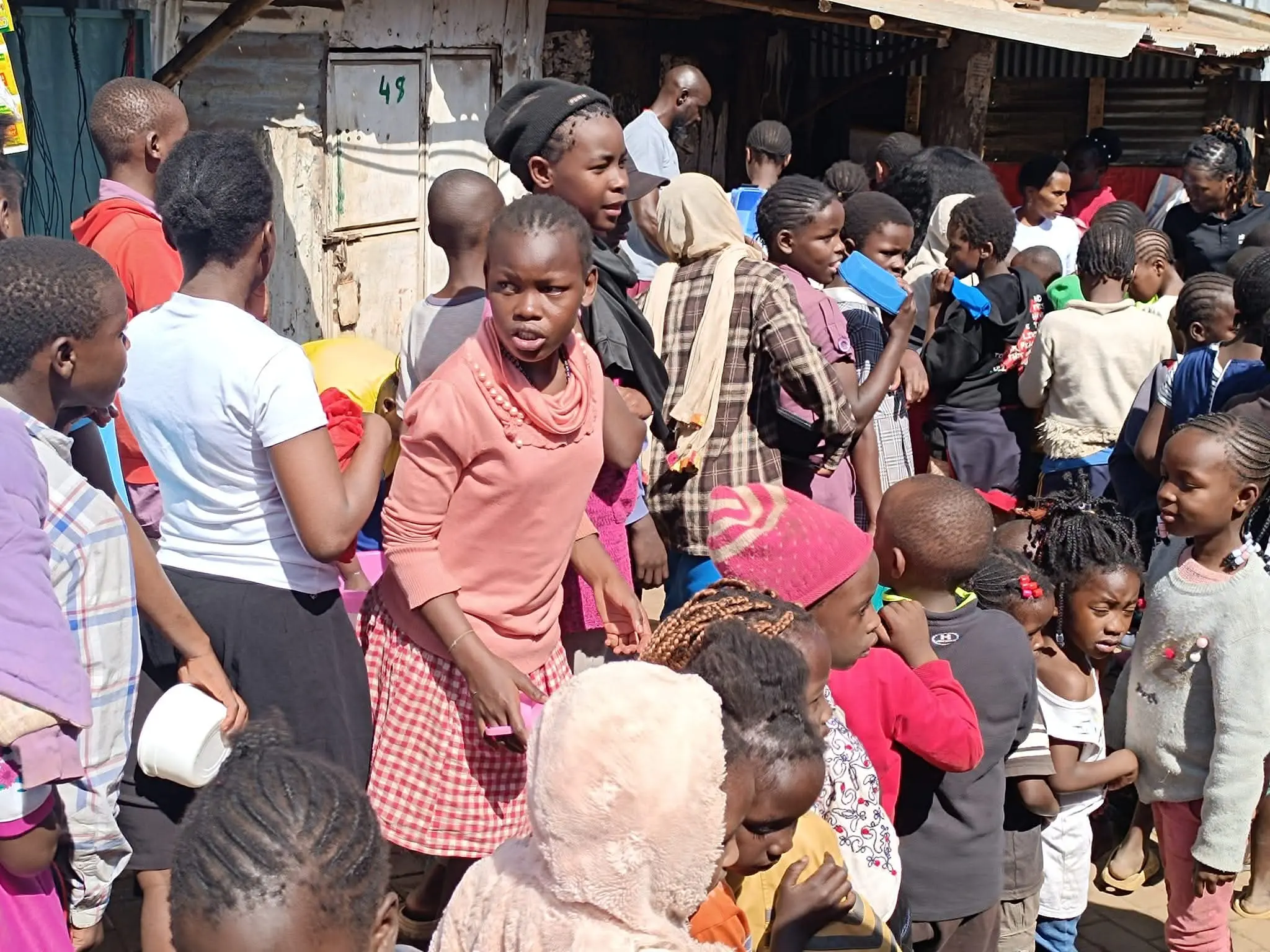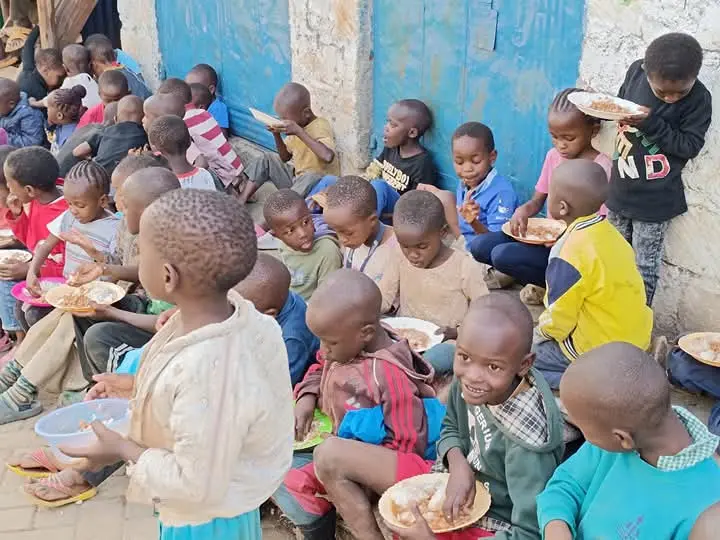
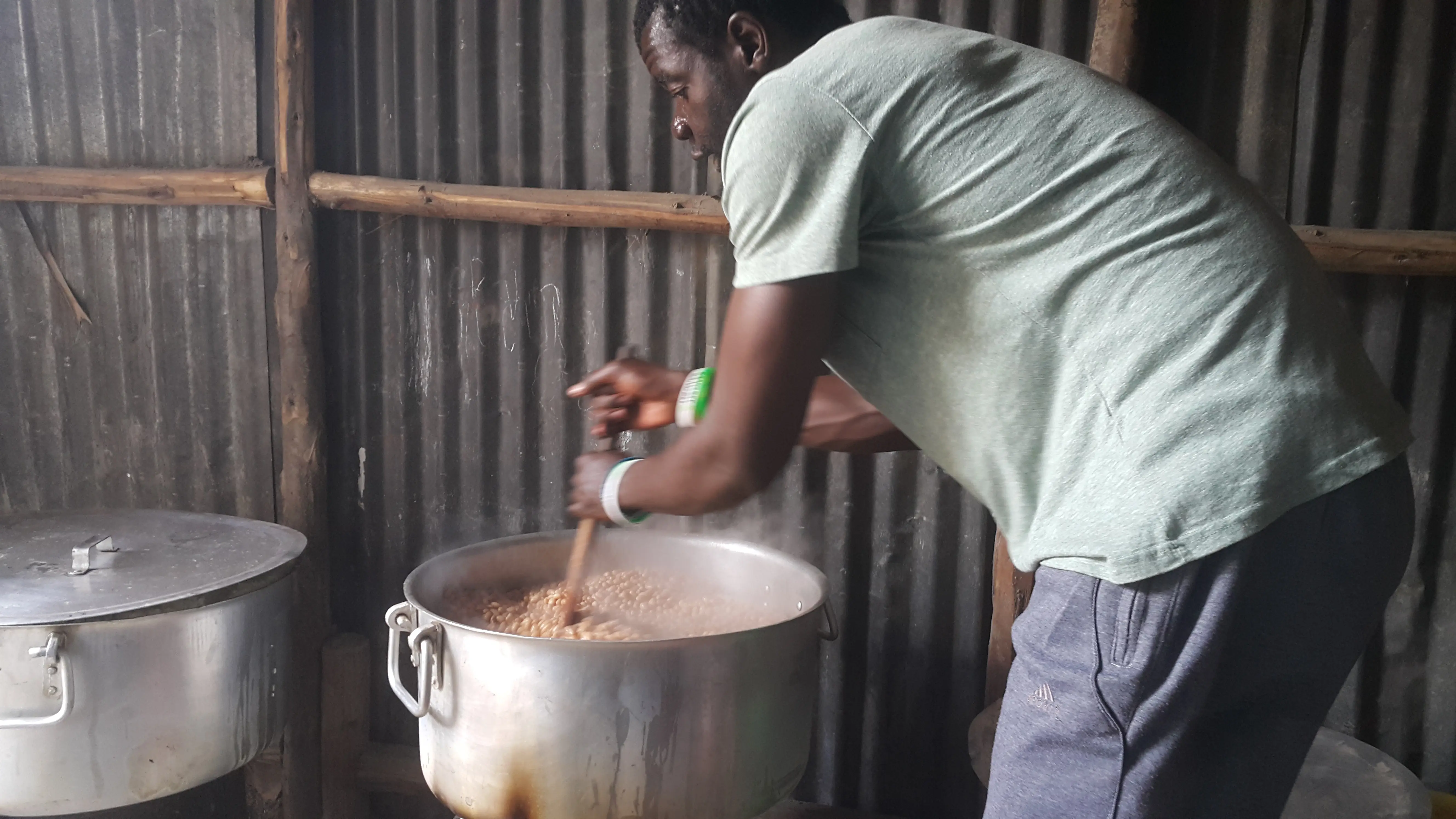
Mid-term break turns Kibera’s mornings louder — no school bells, more small feet on the paths, more hands cupped for a meal. On days like this, our feeding line stretches further than usual, and the kitchen works faster, spoons clinking like a hurried song.
We love that pressure — the good kind — because it means children chose us instead of wandering the whole day on an empty stomach.
Someone always asks for an extra spoon for a sibling at home. Someone else jokes that the queue is longer than the matatu line at peak hours — and still waits, because hunger does not negotiate politely.
On this particular day, the pots stretched far enough to welcome elders too — men and women who sometimes eat last in their own homes, who remember hunger as a season that never fully leaves. There is something tender about watching a grandmother get the same careful portion as a child: dignity served in a plastic plate.
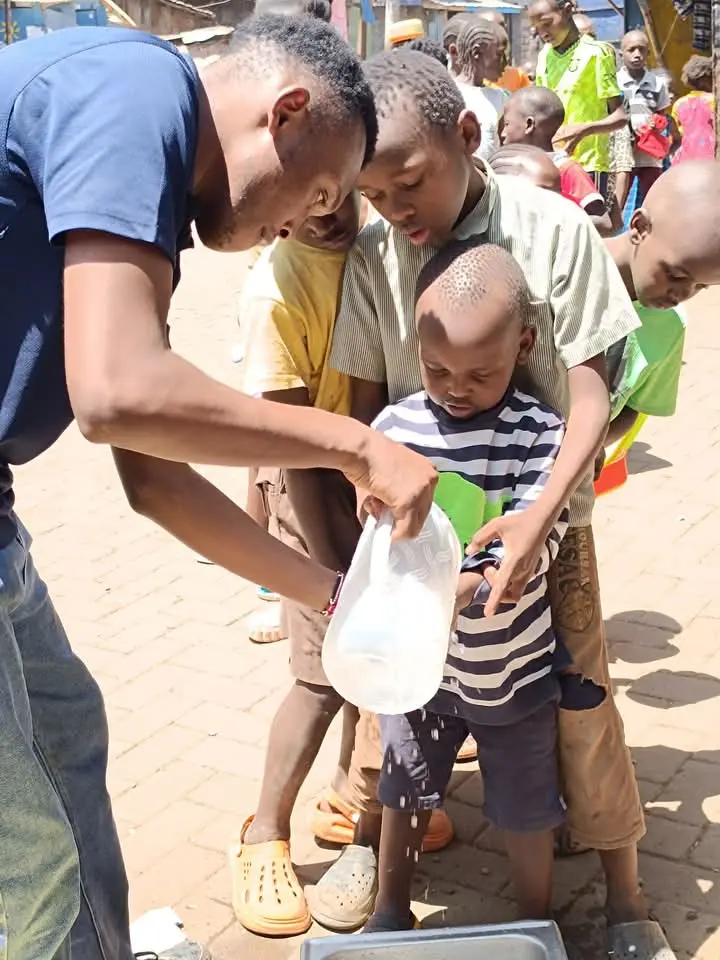
Someone asked whether there would be tea; someone else offered to fetch water so the next pot could start sooner. Community is not only meetings under a tent — sometimes it is these small trades of labour and patience while plates move down the line.
We are not naive. One good day does not fix a hard month. But ending a month with enough — children fed, elders remembered — feels like a small promise kept. If you want the next month to start the same way, walk with us when the next shopping list goes up.