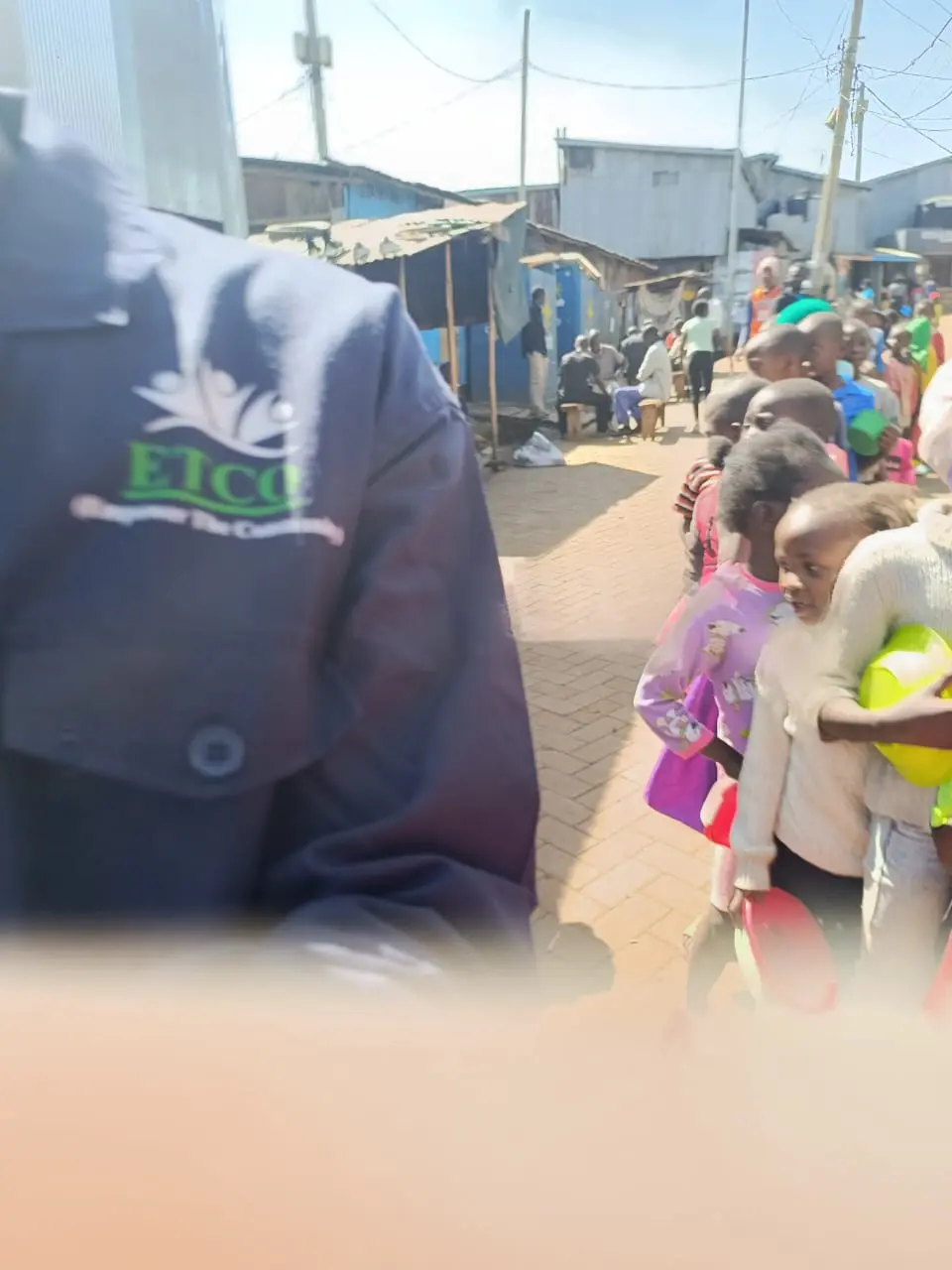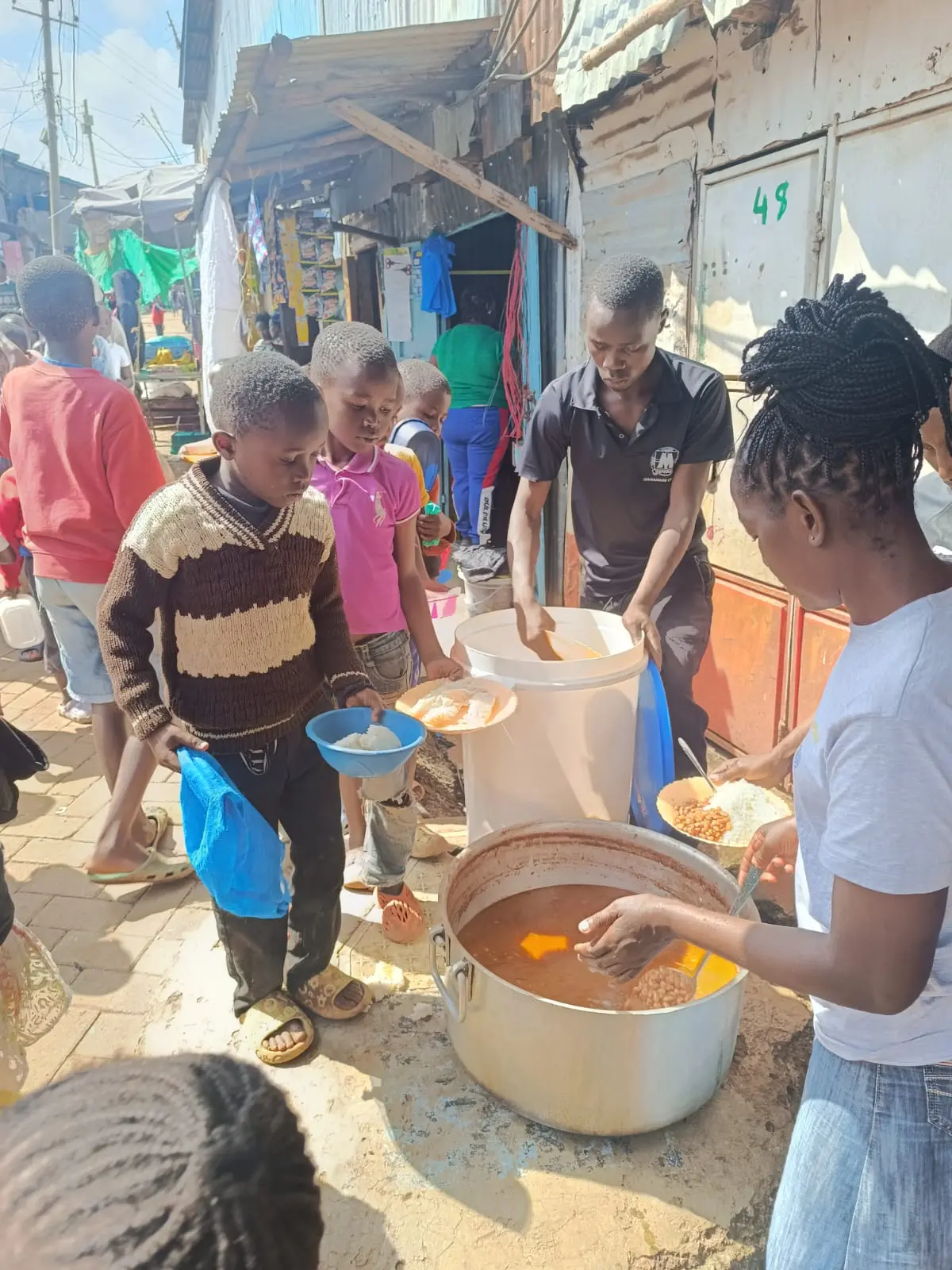
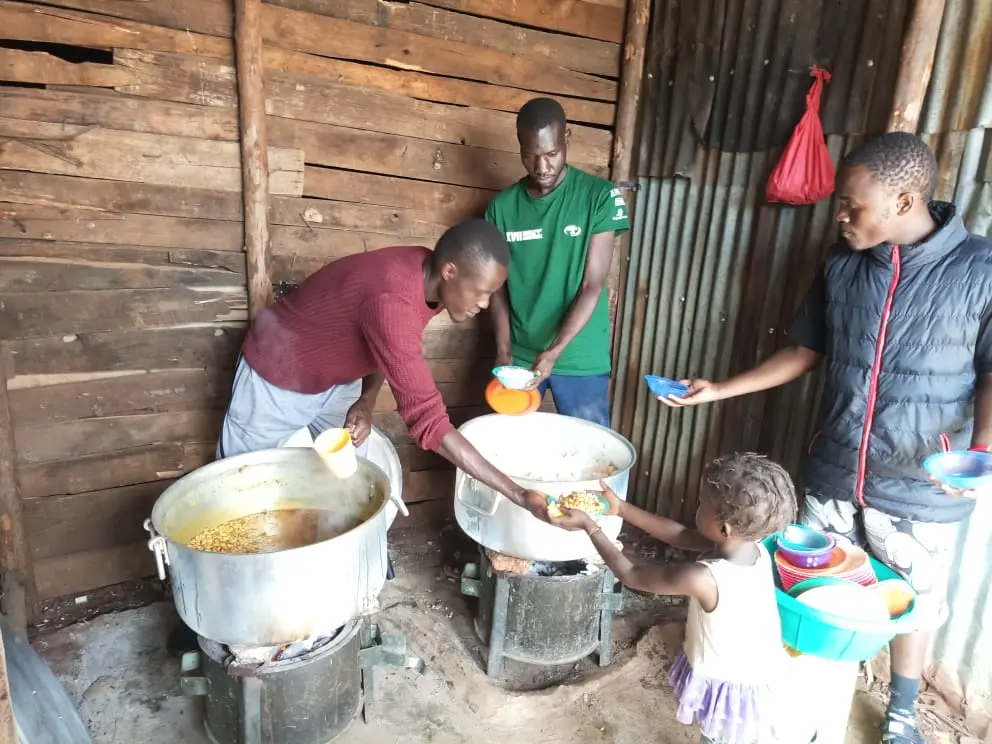
The first month after schools closed had its own rhythm. By mid-morning, the lane outside our office — the room that doubles as kitchen for now — would fill with the sound of small feet and borrowed footballs.
The children had already learned the clock ETCO keeps. Lunch is not an abstract promise; it is a smell. Smoke, onions, a big sufuria working through githeri or whatever the day’s menu allows.
They play close on purpose — close enough to hear the lid lift, close enough to call a friend who is still two lanes away. “It’s almost ready,” someone shouts, and the group tightens like a knot.
A month in, school closure had stopped feeling like a holiday. Homework packets arrived late or not at all; parents left early for mjengo; younger siblings clung to older ones in queues. ETCO did not pretend to replace classrooms — we held a corner steady while adults hunted for rent.
Collince and the team learned names the way you learn market prices: repeat them until they stick. When the sufuria finally sings, bowls line up without being asked. That order is trust — fragile, daily, earned in tablespoons.
Weekend plates, growing numbers
The numbers keep growing, and that is both joy and pressure. More bowls mean more trust — and more shopping, more firewood, more hands washing dishes in cold water.
If you are looking for a way to help from outside Kibera, think in sacks and seasons: maize when prices spike, cooking oil when the tin runs dry, a standing order that survives a tough month. Weekend hunger does not wait for proposals to be signed.
We are grateful to donors who keep the weekends honest: children should not spend Saturday guessing whether food will come. If you have supported this kitchen, you have fed more than a meal — you have bought time for homework, for play, for a breath between worries.