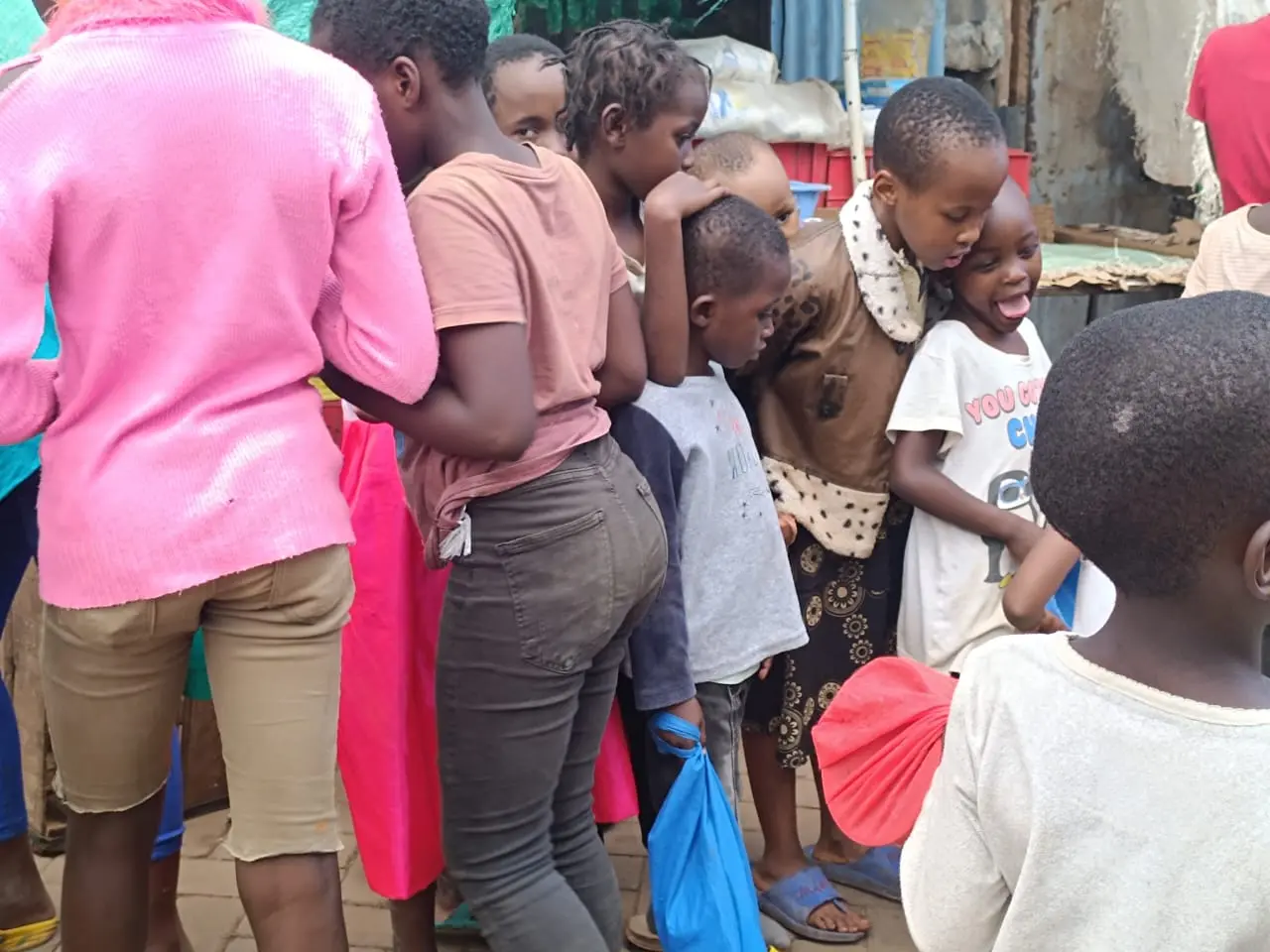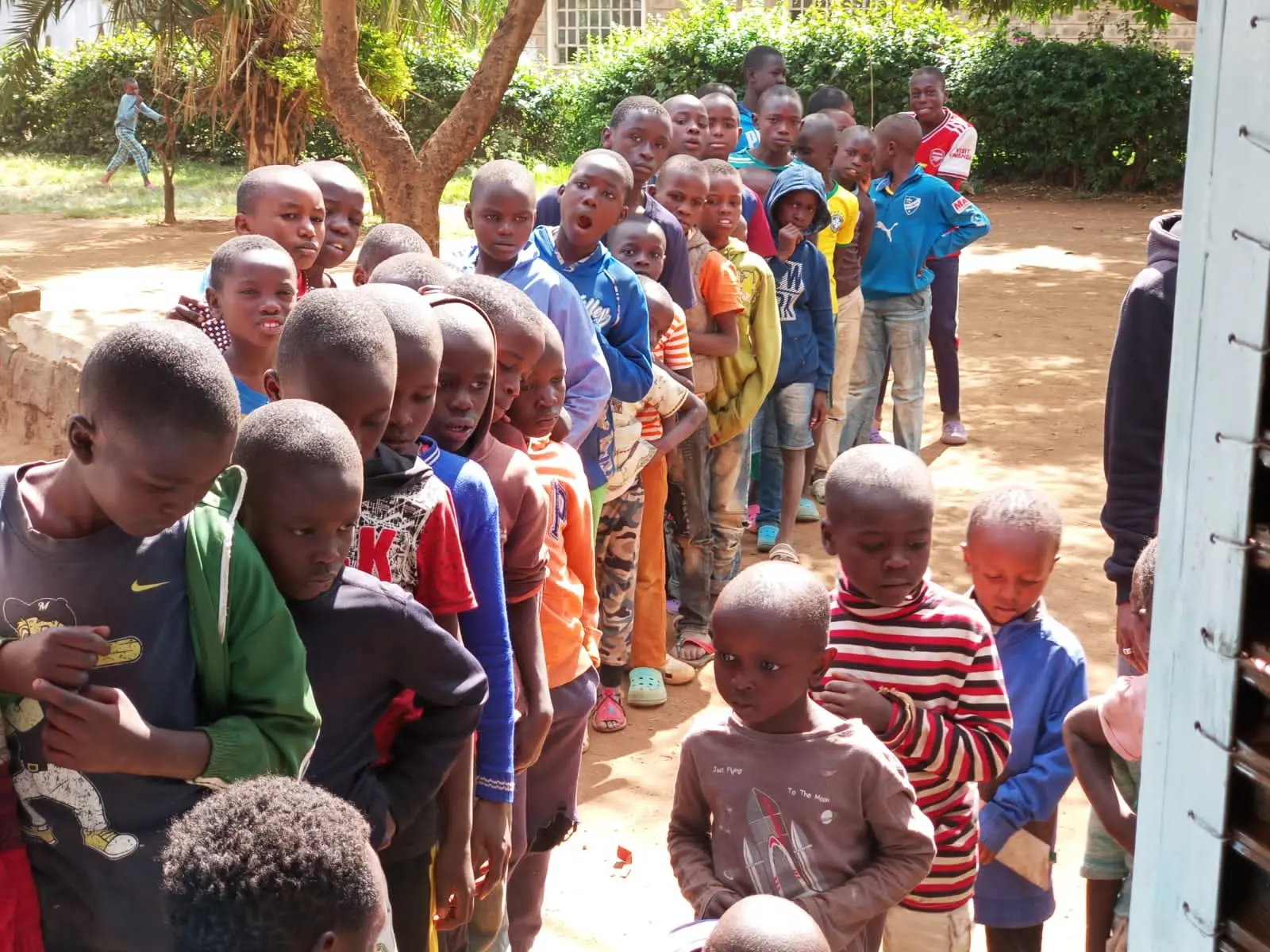
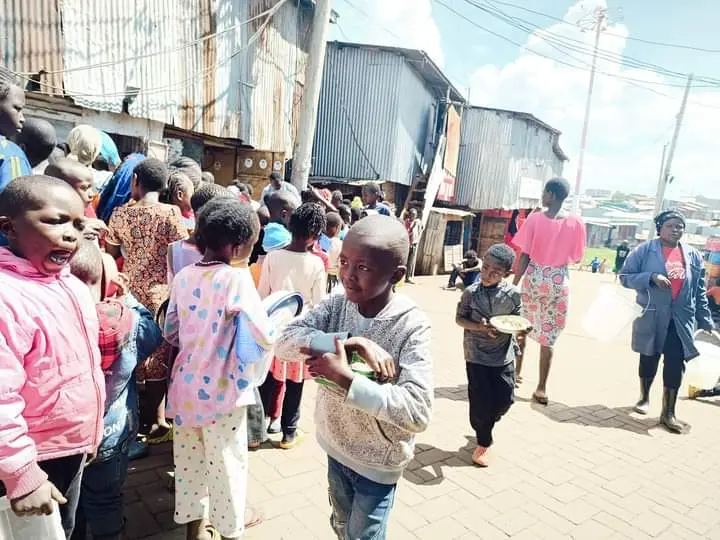
Before anyone tasted stew, paint smudged small fingers and crayons scratched across paper. Someone drew a house with a sun too big for the sky; someone else drew a football player mid-kick. Feeding days are not only about calories—they are about giving children an hour where they are not negotiating survival.
The session was interactive on purpose: drawing and painting first, then food. Joy arrived before the plate did, and that order matters. A child who creates something—even a crooked tree—walks taller to the serving table.
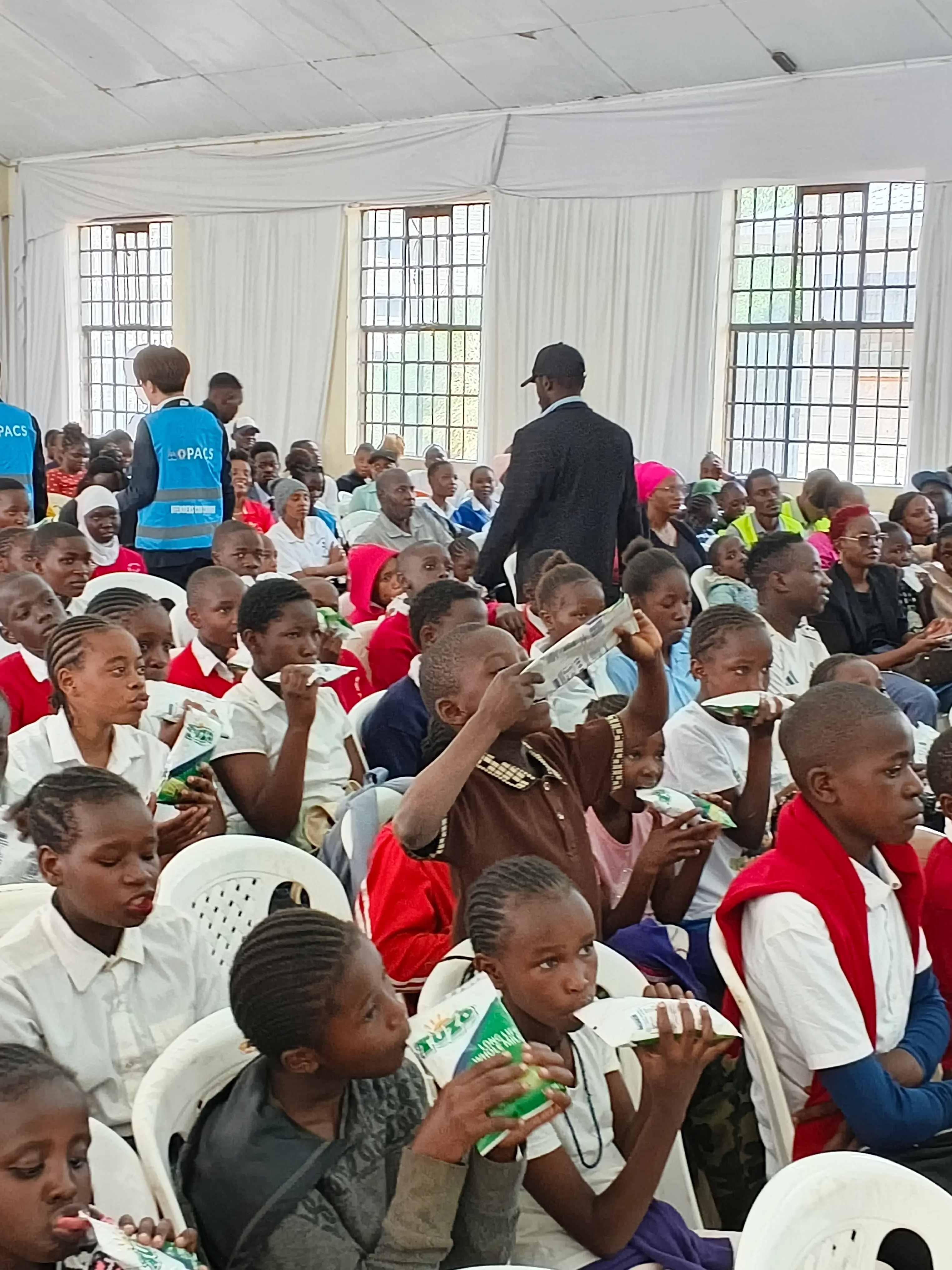
When the meal came, the noise changed pitch: spoons, swallowing, the soft arguing of friends. In the middle of Kibera’s Saturday, we had a small room of safety—colour on paper, warmth in the belly, adults who stayed close enough to notice if someone was quieter than usual.
That is what ‘another great day’ means here. Not perfection. Presence. A feeding programme that remembers children are not only stomachs—they are minds, hands, and stories still forming.
Parents notice it too—when a child runs home with paint on their sleeve and a full stomach, the week feels lighter for a few hours. That is the kind of ‘great’ we are chasing: small, real, repeatable.
If you were there, you know the feeling. If you were not, imagine colour on paper, then ugali on a plate—both kinds of fullness.