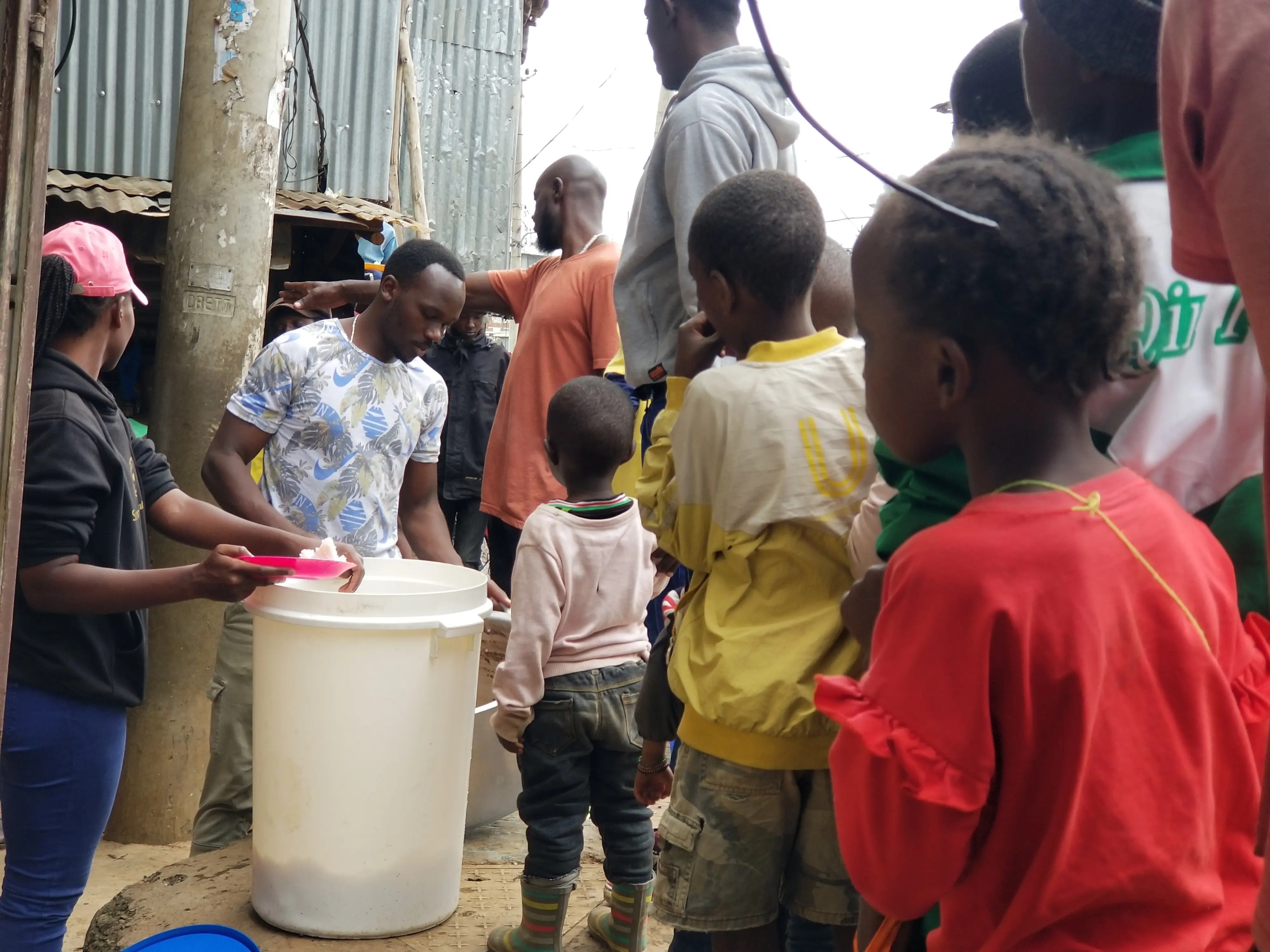
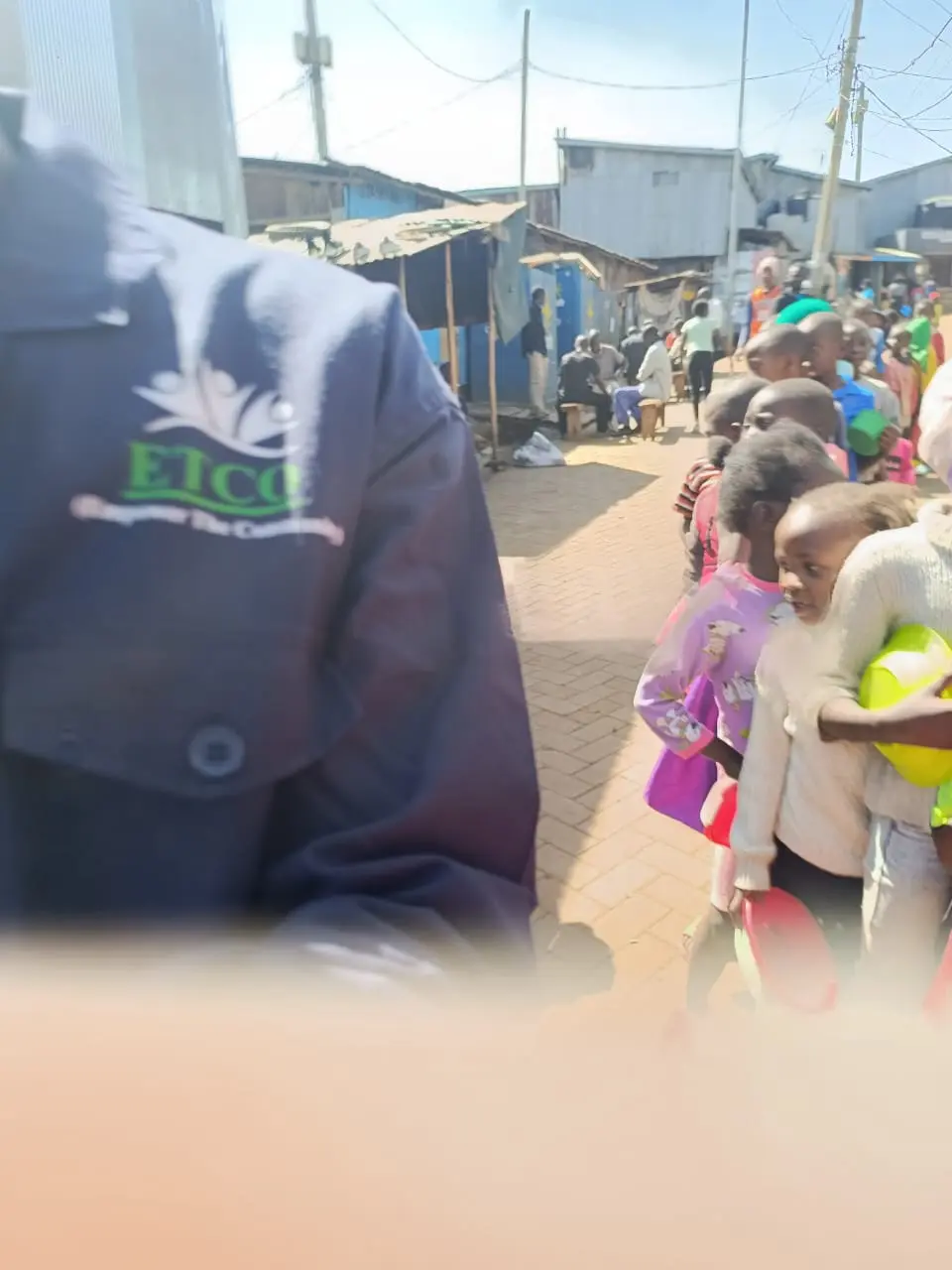
Saturday smells like onions and firewood outside our kitchen corner. By mid-morning, children know the drill: wash hands, take a plate, find a seat on a bench that wobbles but holds.
The feeding programme is our weekly answer to a quiet crisis — kids who might otherwise sip black tea and call it breakfast. We cook something hot, something filling, something that carries them through play and study until evening ugali at home.
We are honest about the gaps: some weeks beans cost more than expected; some weeks rain keeps volunteers home. Still the pots go on, because empty pots echo louder than excuses.
More than a meal
Volunteers chop, stir, and serve alongside aunties from the neighbourhood. Someone keeps the M-PESA line for supplies straight; someone else makes sure the shy child at the back gets a second helping.
You learn names you did not plan to learn. You notice who eats fast and who saves half for a sibling who is still in school. That is not data for a donor deck; it is the reason we keep the programme human.
When the last plate is washed and the fire dies to embers, the lane feels wider for an hour — as if the whole neighbourhood exhaled at once.
If you are looking for a practical way to stand with Kibera's children, this is it. Donate food or funds, or come serve with us — we will find you gloves, a ladle, and plenty of reasons to smile.