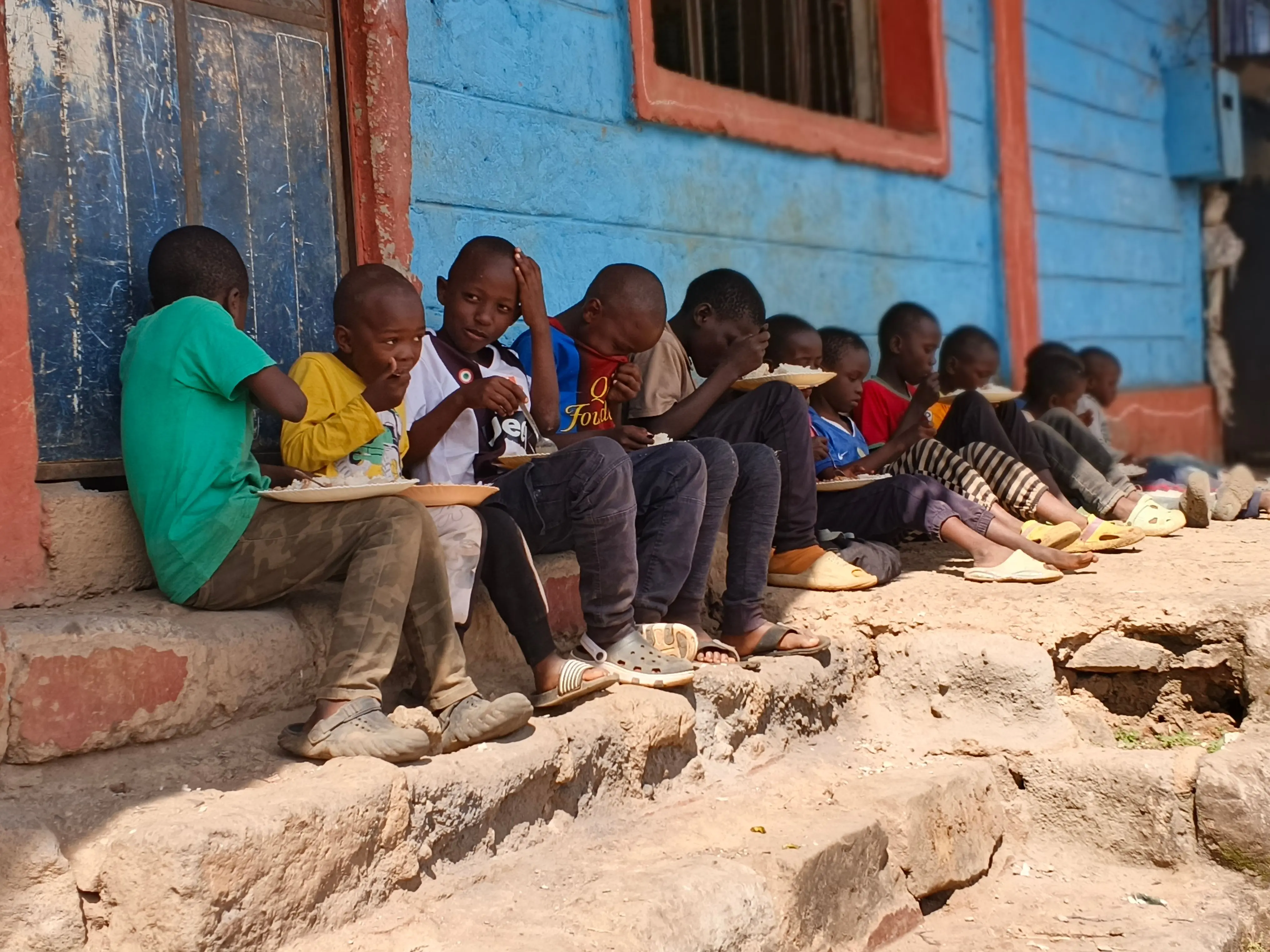

When a visitor stands before the children — a nurse, a teacher, someone who smells like the outside world — the room changes. Chairs scrape closer. Questions sharpen. The wait for food becomes a wait for a story that might reroute a week.
That is what we value: life skills spoken person-to-person, not downloaded from a generic slide. On weeks without guests, children still come — they joke, they kick stones, they hover near the kitchen — but the day stretches thinner. We notice it. They notice it, in the way questions arrive slower and eyes scan the lane for a new face.
Visitors are welcome to share a talk, run an activity, or simply sit in the circle and answer honest questions about work and failure. You do not need a perfect CV — you need respect and punctuality. Message ETCO to schedule; we will match you to an age group and a topic that fits.
The meal will still be served either way. What your presence adds is texture — proof that adults can show up without a camera crew, and still be enough.
Last week a nurse demonstrated hand-washing with a bar of soap and a bucket — no slides, just foam and timing — and the children copied her like a chorus.
That is the difference we chase: voices from the community and from professions, meeting at the same plastic chairs — proof that a feeding day can hold both hunger work and horizon work without pretending either is easy.