Week 2 2024

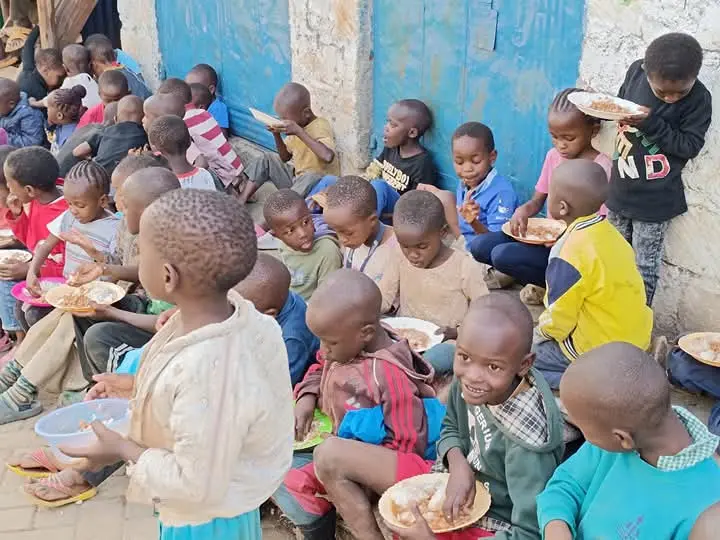
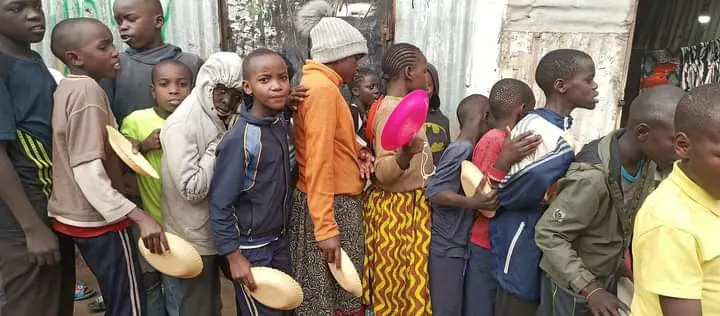
January still has that new-notebook feeling — and Week 2 showed up with more children than we expected. The benches filled faster. Extra names appeared in the register in pencil, then ink.
Families are talking. Neighbours are nudging each other: “Wewe, leta mtoto.” Word has spread that Saturday is not only food; it is a place where a child is seen.
That surge is a compliment and a responsibility. It means trust. It also means we watch our stock more carefully — maize flour does not buy itself, and good intentions do not replace receipts.
We are grateful — and we are planning. More bowls means more maize flour, more greens, more hands stirring. The need is not abstract here; it walks in wearing school socks and oversized sweaters.
Volunteers have been arriving earlier, laughing off the cold morning, tying hairnets, tasting salt like a ritual. The community is answering something basic: children should not eat alone.
We are looking ahead with hope, not because the economics are easy, but because the room keeps filling with resolve. Join us this year as a volunteer or supporter; help us keep the programme steady when holidays stretch household budgets thin.
If you are far away, you can still stand with us — a transfer on M‑PESA, a monthly commitment, a message that says you remember Saturdays exist beyond your own calendar.
Week 2 is early — but early matters. It sets tone. It tells children someone noticed before the year got away from them.
Project Site Visit by Rotary Club of IPSWICH (USA) and Kikuyu (Kenya)
It was a great and engaging day of partnership and learning as we hosted the International Rotary Club of IPSWICH team, led by Environmental Lawyer Chris and his wife, Jane, Former President of Rotary Club of Kikuyu Hon. George Ngotho and Rotarian Yumbya for a visit to our project implementation sites. The visit provided an opportunity to review the project areas on the ground, discuss implementation priorities, and strengthen our shared commitment to sustainable environmental and community development. We also had the opportunity to visit the Nairobi Rivers Commission (NRC), where we were hosted by Commissioner Dr. Loice Kipkorir, a member of the Ngong River Committee. We explored opportunities to strengthen collaboration and align our work with the Nairobi Rivers Commission's Restoration Framework.

Community Capacity Building Training
We are currently participating in the ongoing PROVE (Public Space Governance Research, Observation, Validation and Experimentation) Pilot Programme, a four-month initiative by Public Space Networks (PSN) bringing together 11 community groups from Kamukunji and Korogocho. The programme focuses on strengthening community organizations’ capacity to manage, protect and improve public spaces as well as restoring rivers and it's ecosystems. The ongoing capacity-building training is helping CBOs and community organizations better understand the connection between public spaces, river restoration and ecosystem conservation, while exploring practical approaches and stronger collaboration among communities, government agencies, development partners and other stakeholders.

High Level NRC & Development Partners Meeting
Representing the Ngong River Regeneration Network, I'm having the privilege of attending a high-level breakfast meeting convened by the Nairobi Rivers Commission (NRC) in collaboration with the Kenya Permanent Mission to UN-Habitat. The meeting has brought together Development Partners, Government Agencies, Private Sector representatives, and Community representatives to deliberate on the restoration and sustainable management of Nairobi’s rivers.