
World Water day (Thwake Dam Visit)
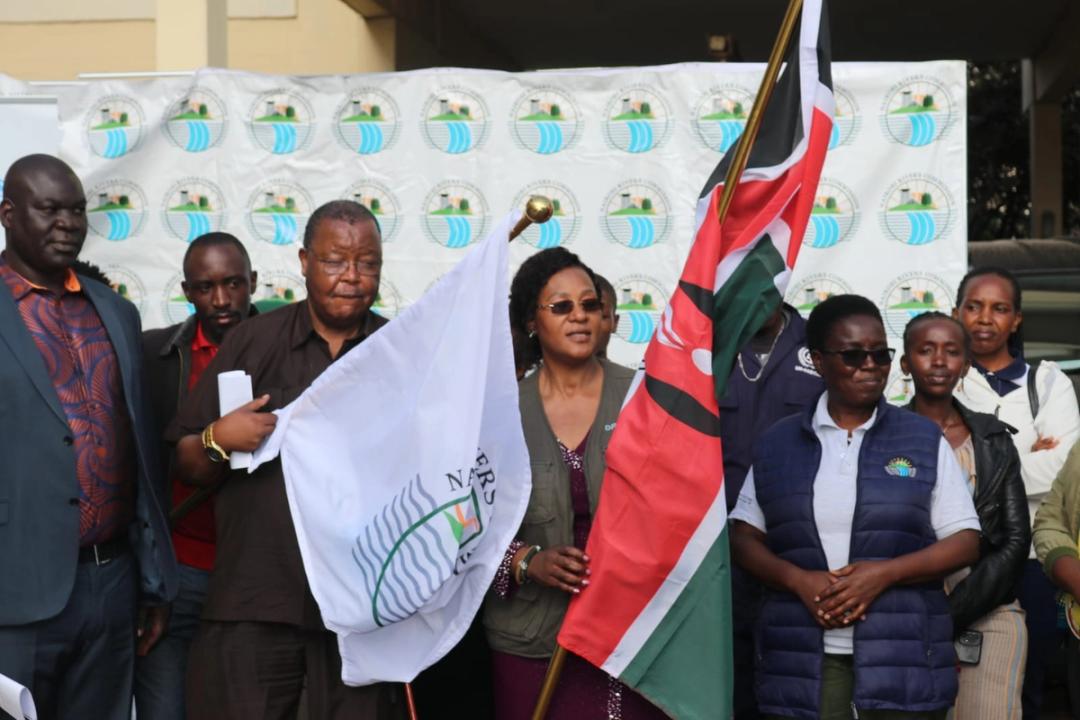
World Water Day is easy to celebrate in speeches. Harder is standing at a dam and realising how much upstream behaviour becomes downstream reality—how a bottle thrown casually can become part of someone else’s flood.
The Nairobi Rivers Commission and UN-Habitat organised a community trip to Thwake Dam so Nairobi stakeholders could see what pollution costs when water is meant for millions—not a photo opportunity only, but a lesson in responsibility.
At flag-off, Dr Pamela Olet stressed river regeneration and government commitment. Vice Chair Prof. Elijah Biamah and Commissioner Dr Duncan Ojwang were present—leaders putting bodies on a bus, not only signatures on paper.
Thwake is impressive: water storage, hydropower potential, irrigation, and the quiet argument that Athi and Thwake—and tributaries like Nairobi, Ngong, and Mathare—need to flow clean enough to be useful. Efficient flow matters because dams do not fix what we refuse to manage upstream.
Waste management and river maintenance are not ‘nice to have’ items; they are the difference between water you can plan around and water that brings filth to your doorstep. If you live upstream, remember someone downstream is drinking your mistakes. If you live in Kibera, you already know that truth in your bones.
Coming back from Thwake, the homework is simple to say and hard to live: fewer shortcuts, more bins, more honesty about where rubbish ends. Water day is not one calendar date—it is every day you choose not to throw plastic into a drain.
Kibera does not need more slogans; it needs cleaner tributaries, safer crossings, and neighbours who treat water like the shared inheritance it is.



Engaging Children through Feeding Program
Thanks to Chris and Jayne, ETCO had a warm feeding program for children at our new office—bringing joy, a good meal, and community together in Kibera.
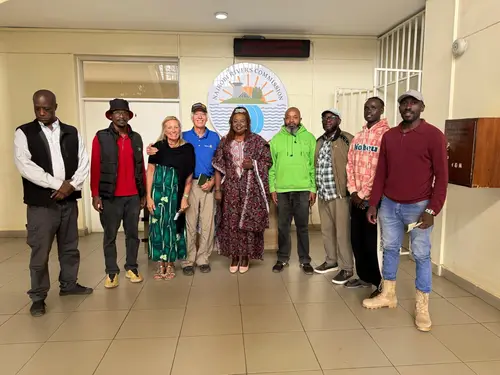
Project Site Visit by Rotary Club of IPSWICH (USA) and Kikuyu (Kenya)
It was a great and engaging day of partnership and learning as we hosted the International Rotary Club of IPSWICH team, led by Environmental Lawyer Chris and his wife, Jane, Former President of Rotary Club of Kikuyu Hon. George Ngotho and Rotarian Yumbya for a visit to our project implementation sites. The visit provided an opportunity to review the project areas on the ground, discuss implementation priorities, and strengthen our shared commitment to sustainable environmental and community development. We also had the opportunity to visit the Nairobi Rivers Commission (NRC), where we were hosted by Commissioner Dr. Loice Kipkorir, a member of the Ngong River Committee. We explored opportunities to strengthen collaboration and align our work with the Nairobi Rivers Commission's Restoration Framework.
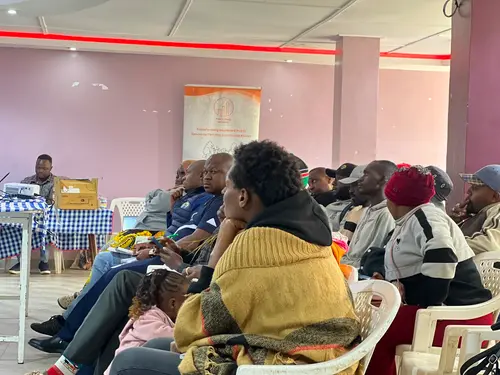
Community Capacity Building Training
We are currently participating in the ongoing PROVE (Public Space Governance Research, Observation, Validation and Experimentation) Pilot Programme, a four-month initiative by Public Space Networks (PSN) bringing together 11 community groups from Kamukunji and Korogocho. The programme focuses on strengthening community organizations’ capacity to manage, protect and improve public spaces as well as restoring rivers and it's ecosystems. The ongoing capacity-building training is helping CBOs and community organizations better understand the connection between public spaces, river restoration and ecosystem conservation, while exploring practical approaches and stronger collaboration among communities, government agencies, development partners and other stakeholders.