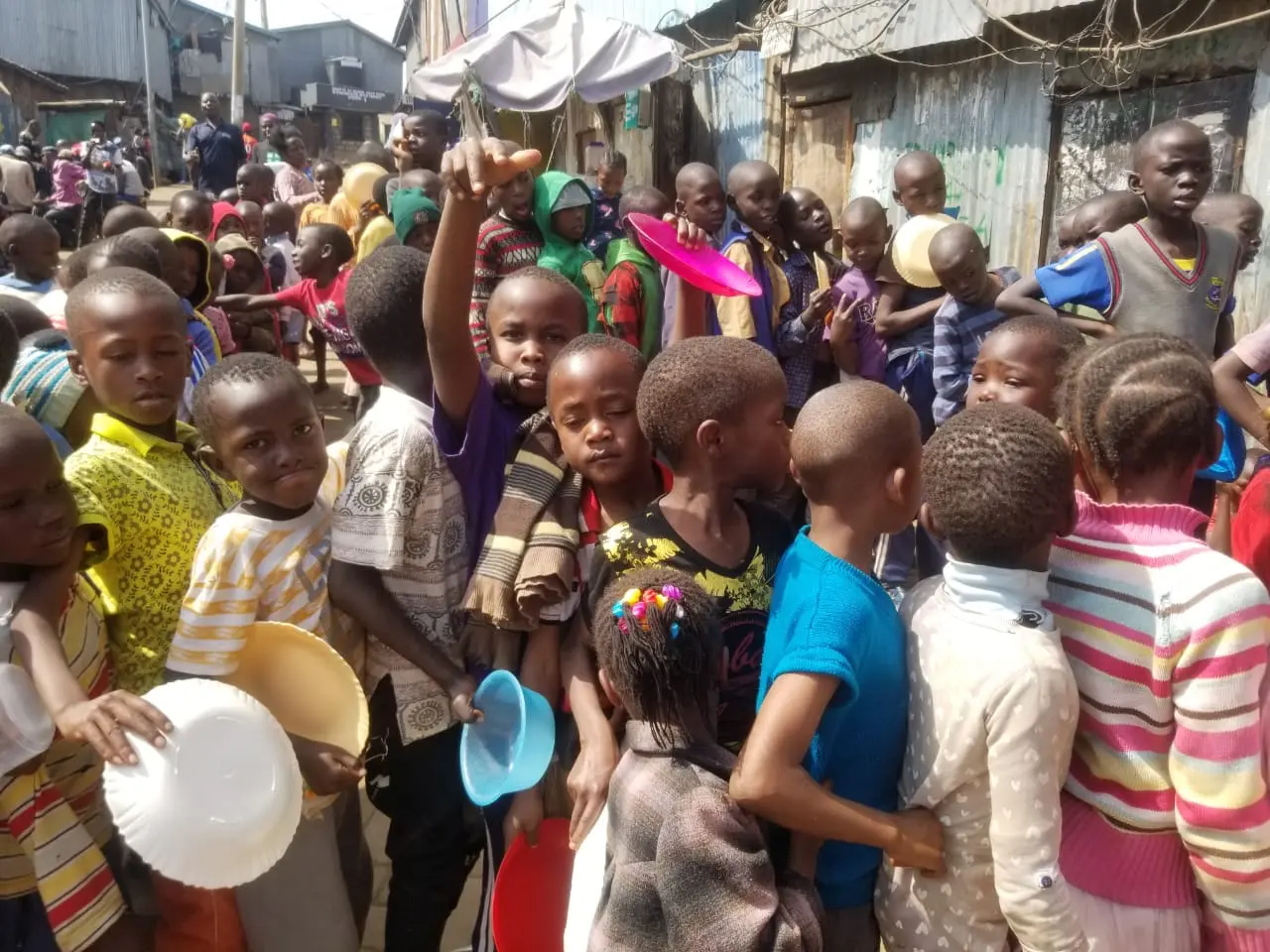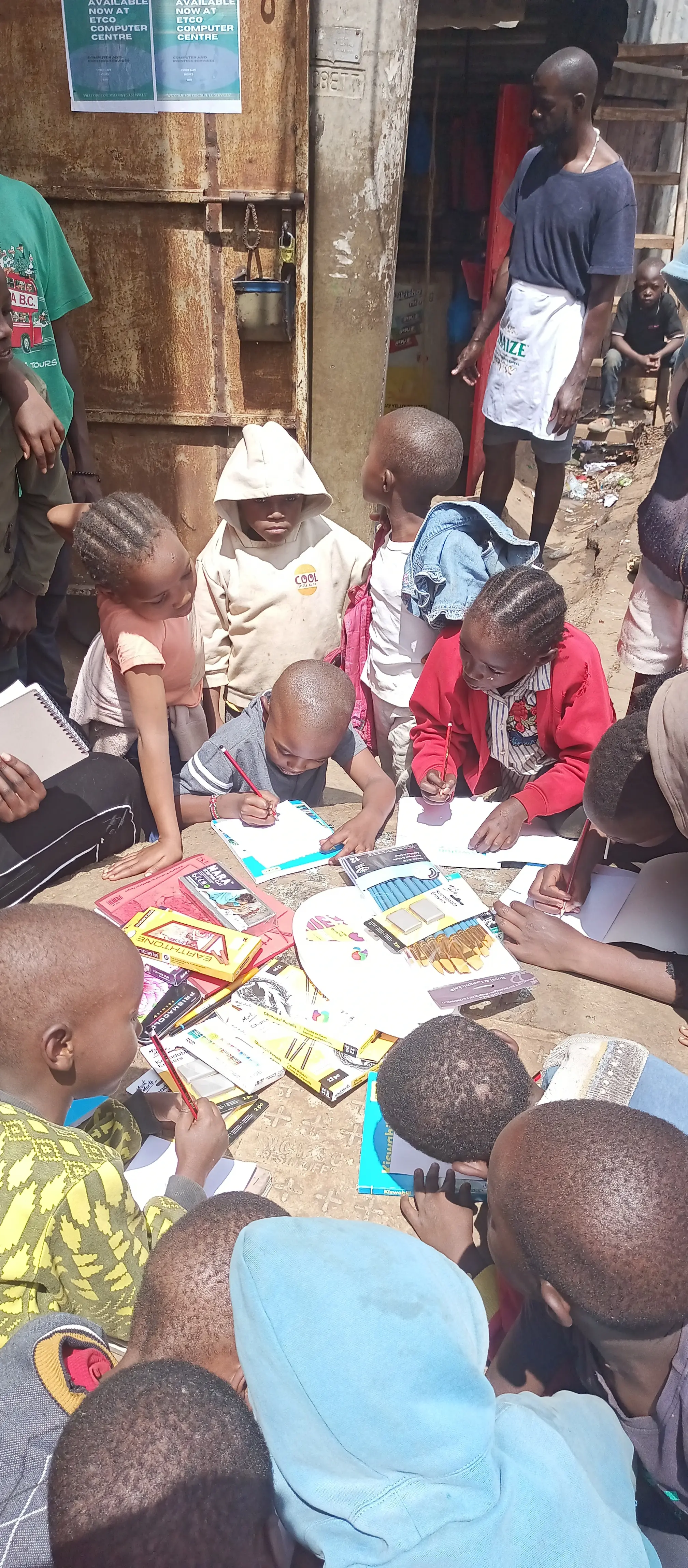
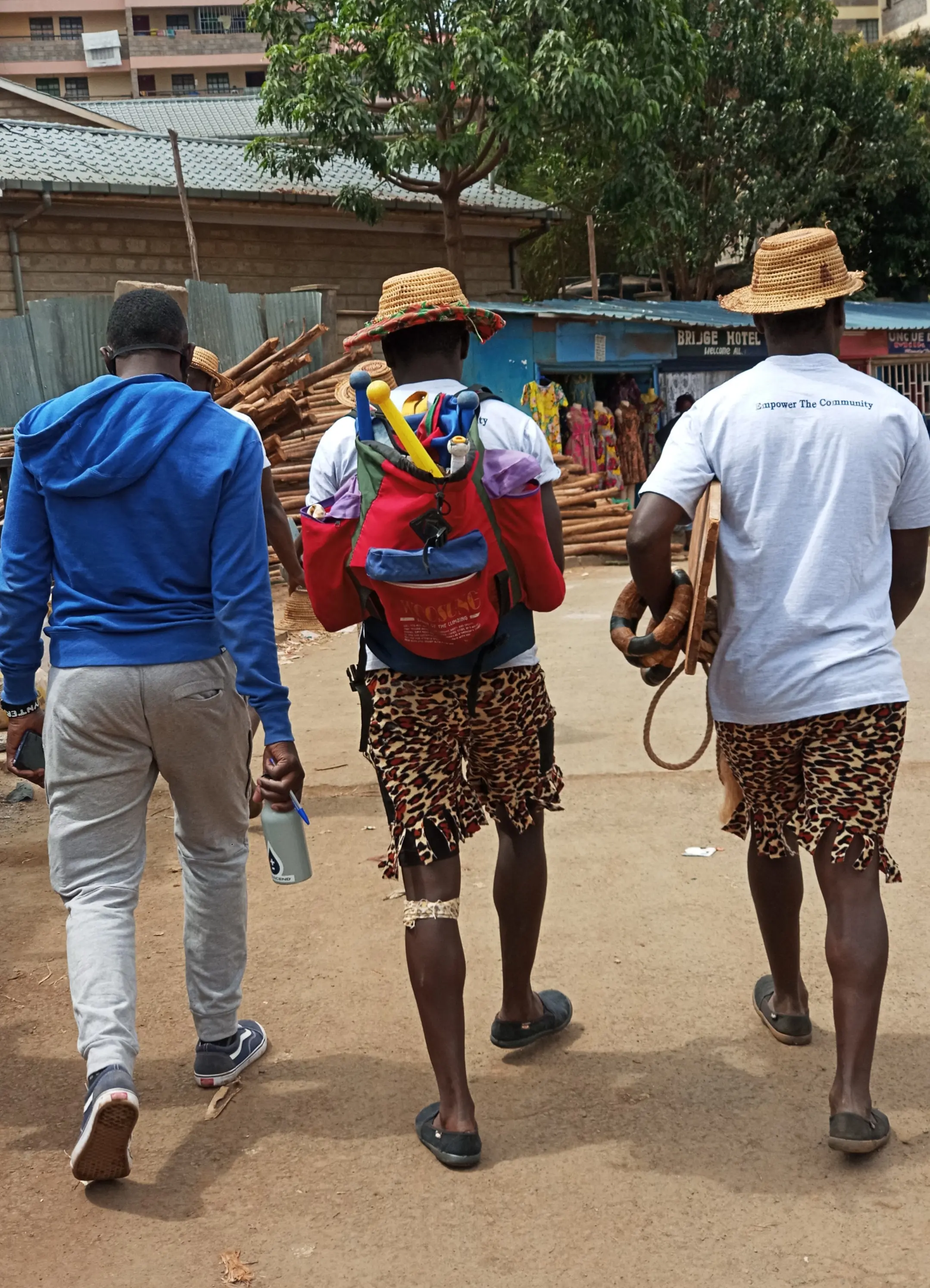
A cartwheel stops traffic faster than a leaflet. When ETCO Theatre and ETCO Acrobats step into the street, we first earn attention — flips, drums, a circle of faces — then we speak while breath is still catching.
From March 2020, during Kenya’s partial lockdown, our acrobats carried COVID‑19 messages through Kibera, Lang’ata, Mukuru, Mathare — settlements where rumours travel faster than ambulances.
We demonstrated how masks sit on real faces, how soap works on real hands, how distance can be love. When the lockdown lifted, we travelled farther — other cities, other lanes, same discipline.
Partial lockdown meant partial mercy — work stopped, fear spread, and rumours ran faster than testing. Our acrobats turned the street into a classroom: bodies upside down so minds could turn right-side up.
After each show, someone always asked practical questions — where to wash hands when the tap is shared, what to do if a neighbour coughs through the night. We answered without theatre, then packed the mats while the crowd thinned.
What street artists still need
Street art feeds families when the hat is passed. Yet artists still lack mats, safe training space, transport to gigs, and a fair allowance after the crowd goes home. Marketing teams pay for attention too — we can do both with support.
Sponsor a training session, fund a minibus day, or buy foam for falls — we will turn it into truth told mid-air, where people actually stop to listen.
Businesses wanting ethical street marketing can hire teams that already know how to hold a crowd — and pay fair rates. Ask us; we will connect you to performers who earn with their shoulders, not pity.