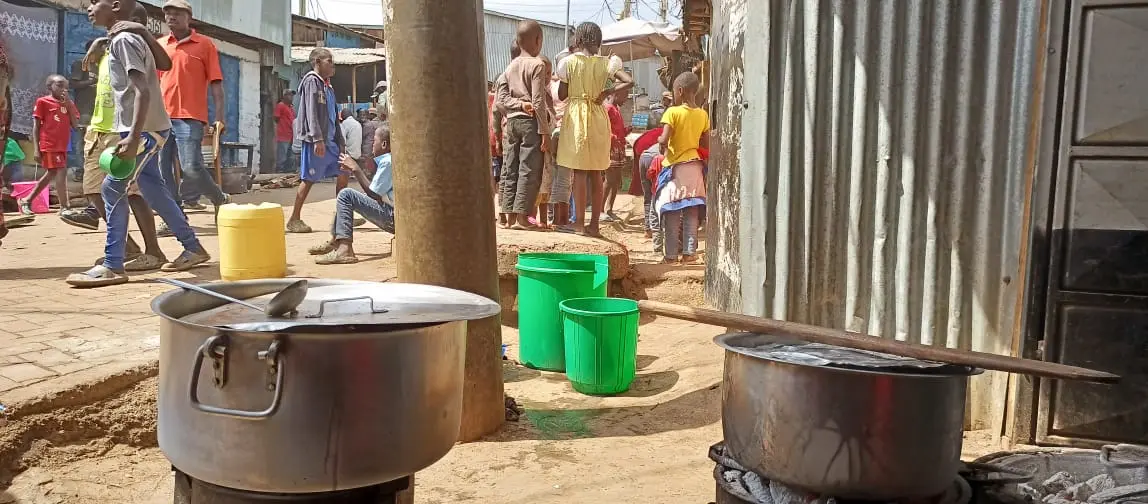
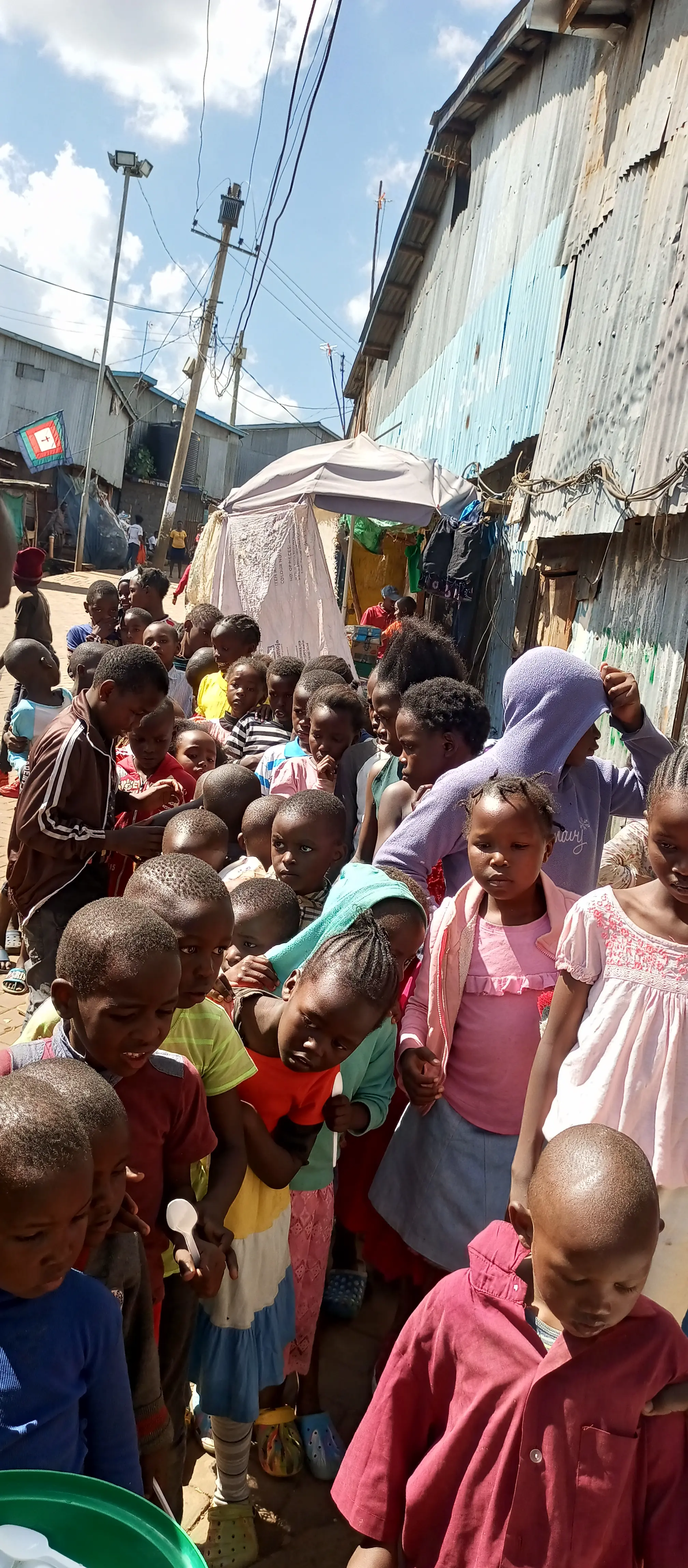
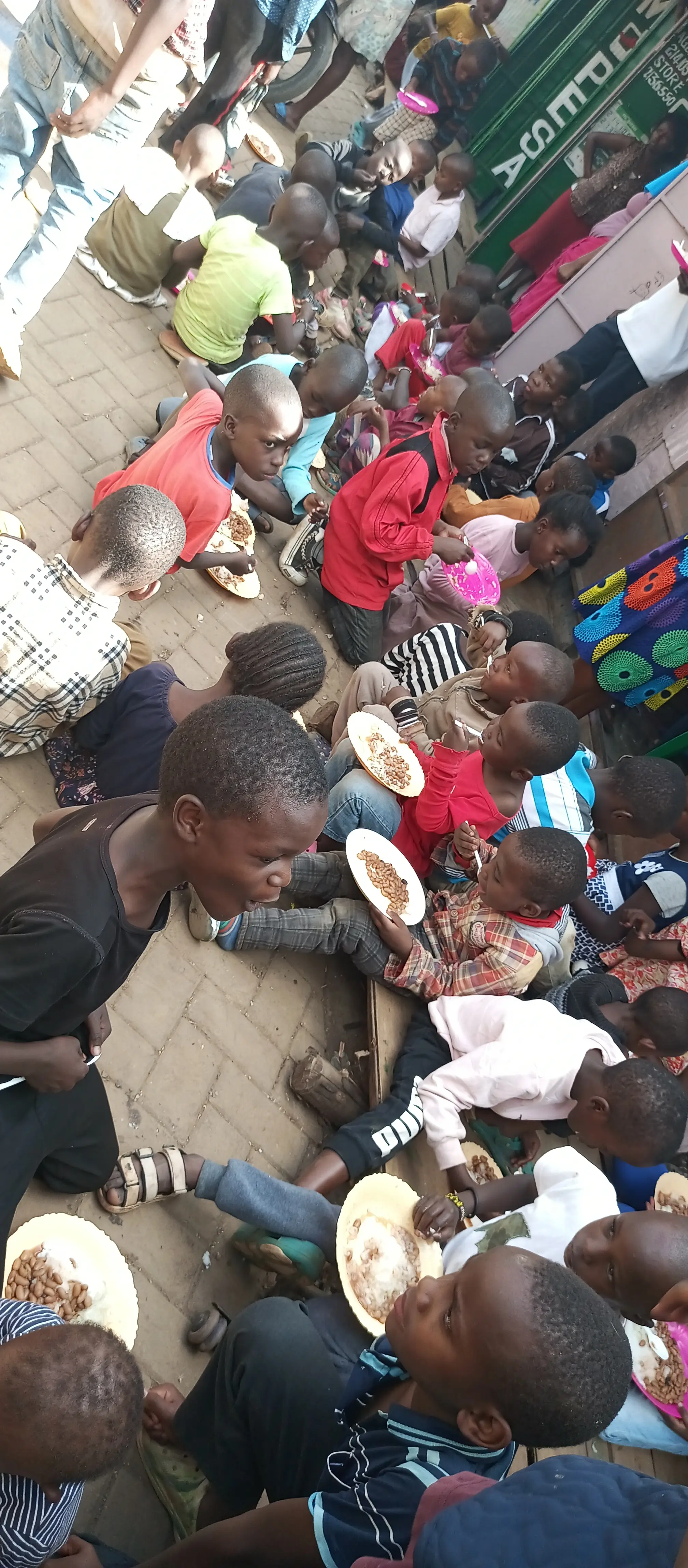
Feeding for bonding

A child’s shoulders drop a little when the belly stops shouting. Then words come — sometimes shy, sometimes a flood — about school, about a brother who is sick, about a fear they would not say on an empty stomach.
That is why our Saturday feeding is more than calories. Steam from ugali and beans creates a kind of permission: you are safe enough to sit, safe enough to be seen. In that unhurried half-hour, a volunteer can ask about dreams without sounding like a survey.
We talk life skills the way neighbours talk — hand-washing, sleep, what to do when an adult makes you uncomfortable. Hard topics land easier when mouths are not clenched from hunger. We watch children practise listening, disagreeing without insult, apologising — small social muscles that classrooms assume but streets do not always teach, especially when a lane feels louder than a teacher.
Always grateful to everyone who makes this programme possible — from the auntie stirring the pot to the donor who tops up M-PESA when the price of maize jumps.
Last Saturday a boy described his teacher’s voice until the whole bench laughed — then went quiet when he added he wants to be listened to the same way.
If you want to sponsor a meal and join us for the circle afterward — not to lecture, but to listen — send us a message. Bonding is not a bonus feature. It is the point, and it begins when adults stop performing charity and start sharing time.
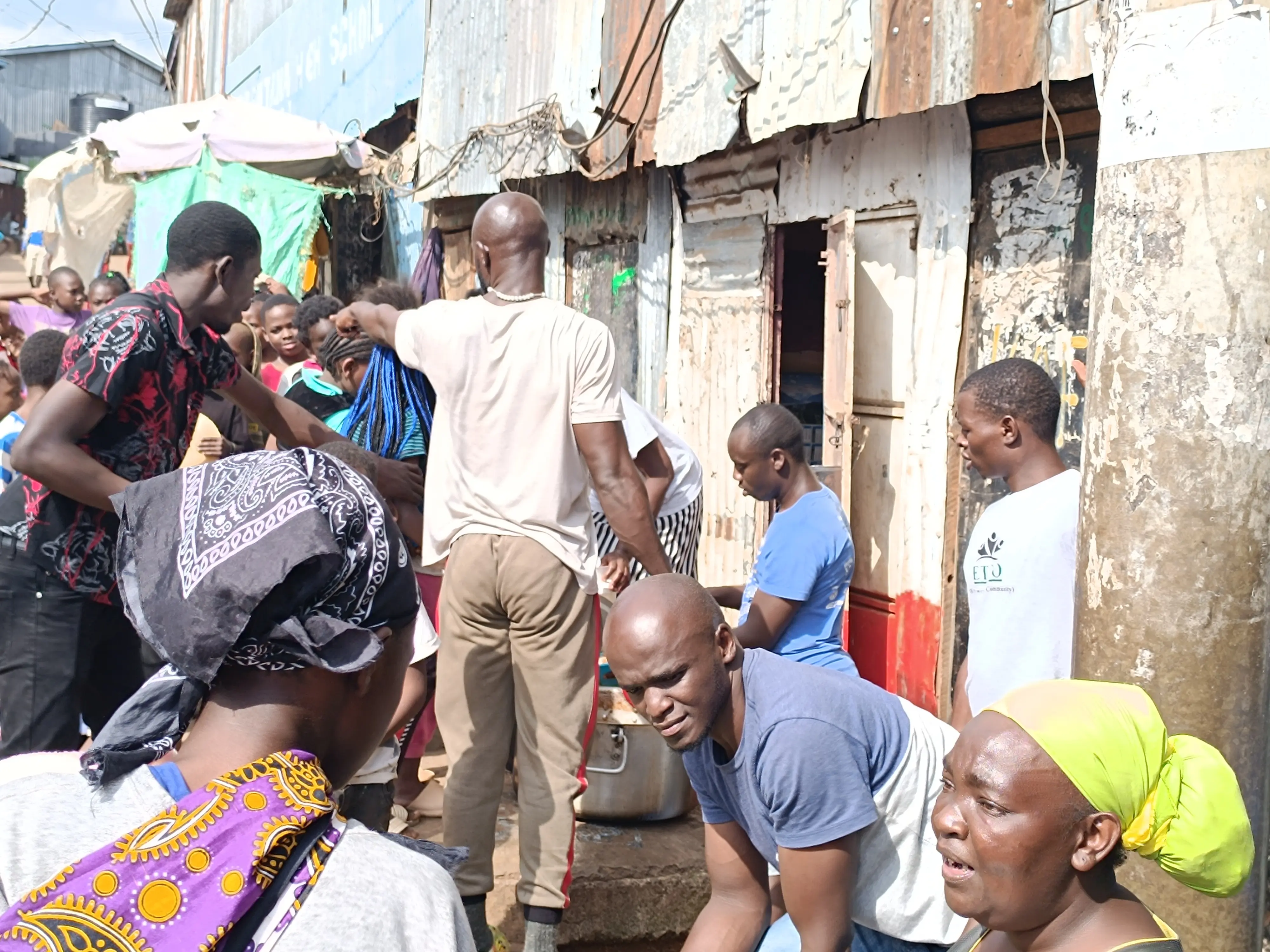
Project Site Visit by Rotary Club of IPSWICH (USA) and Kikuyu (Kenya)
It was a great and engaging day of partnership and learning as we hosted the International Rotary Club of IPSWICH team, led by Environmental Lawyer Chris and his wife, Jane, Former President of Rotary Club of Kikuyu Hon. George Ngotho and Rotarian Yumbya for a visit to our project implementation sites. The visit provided an opportunity to review the project areas on the ground, discuss implementation priorities, and strengthen our shared commitment to sustainable environmental and community development. We also had the opportunity to visit the Nairobi Rivers Commission (NRC), where we were hosted by Commissioner Dr. Loice Kipkorir, a member of the Ngong River Committee. We explored opportunities to strengthen collaboration and align our work with the Nairobi Rivers Commission's Restoration Framework.

Community Capacity Building Training
We are currently participating in the ongoing PROVE (Public Space Governance Research, Observation, Validation and Experimentation) Pilot Programme, a four-month initiative by Public Space Networks (PSN) bringing together 11 community groups from Kamukunji and Korogocho. The programme focuses on strengthening community organizations’ capacity to manage, protect and improve public spaces as well as restoring rivers and it's ecosystems. The ongoing capacity-building training is helping CBOs and community organizations better understand the connection between public spaces, river restoration and ecosystem conservation, while exploring practical approaches and stronger collaboration among communities, government agencies, development partners and other stakeholders.

High Level NRC & Development Partners Meeting
Representing the Ngong River Regeneration Network, I'm having the privilege of attending a high-level breakfast meeting convened by the Nairobi Rivers Commission (NRC) in collaboration with the Kenya Permanent Mission to UN-Habitat. The meeting has brought together Development Partners, Government Agencies, Private Sector representatives, and Community representatives to deliberate on the restoration and sustainable management of Nairobi’s rivers.