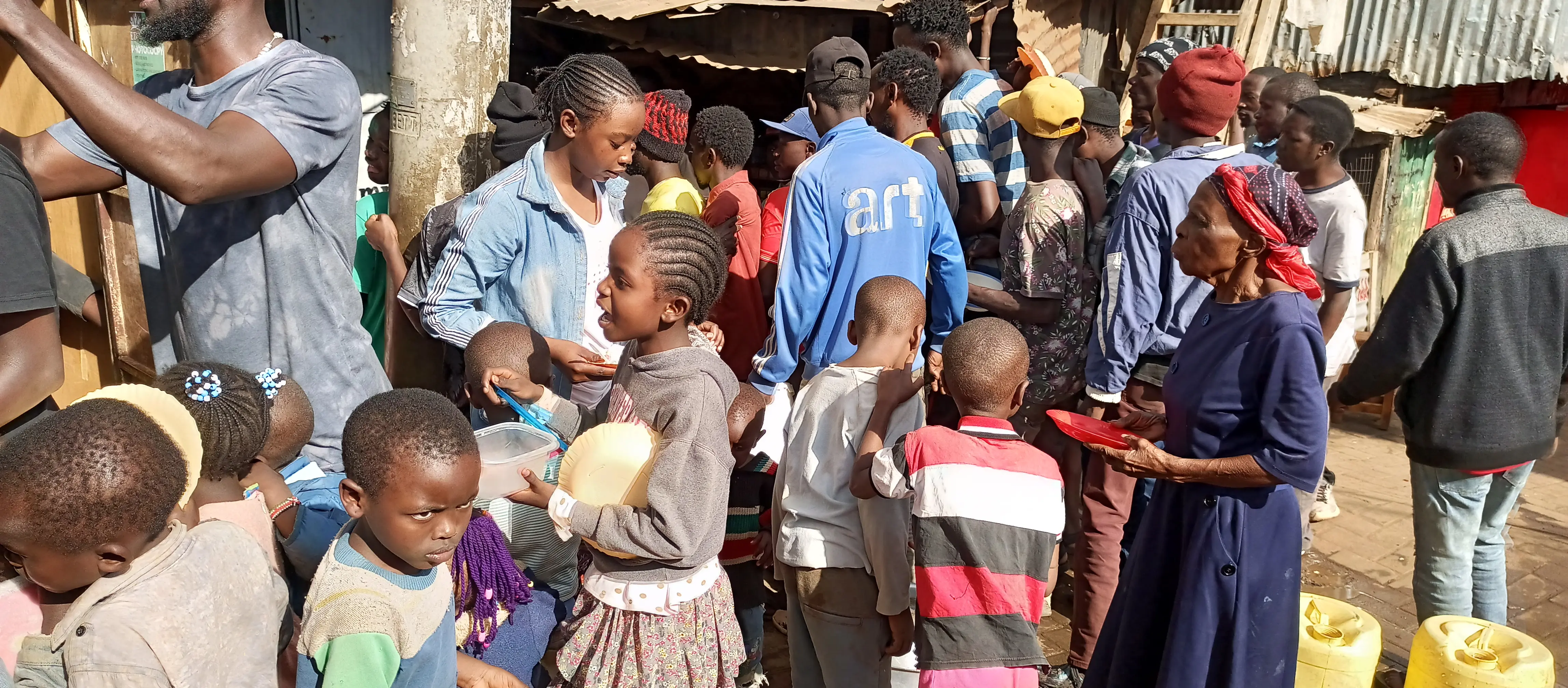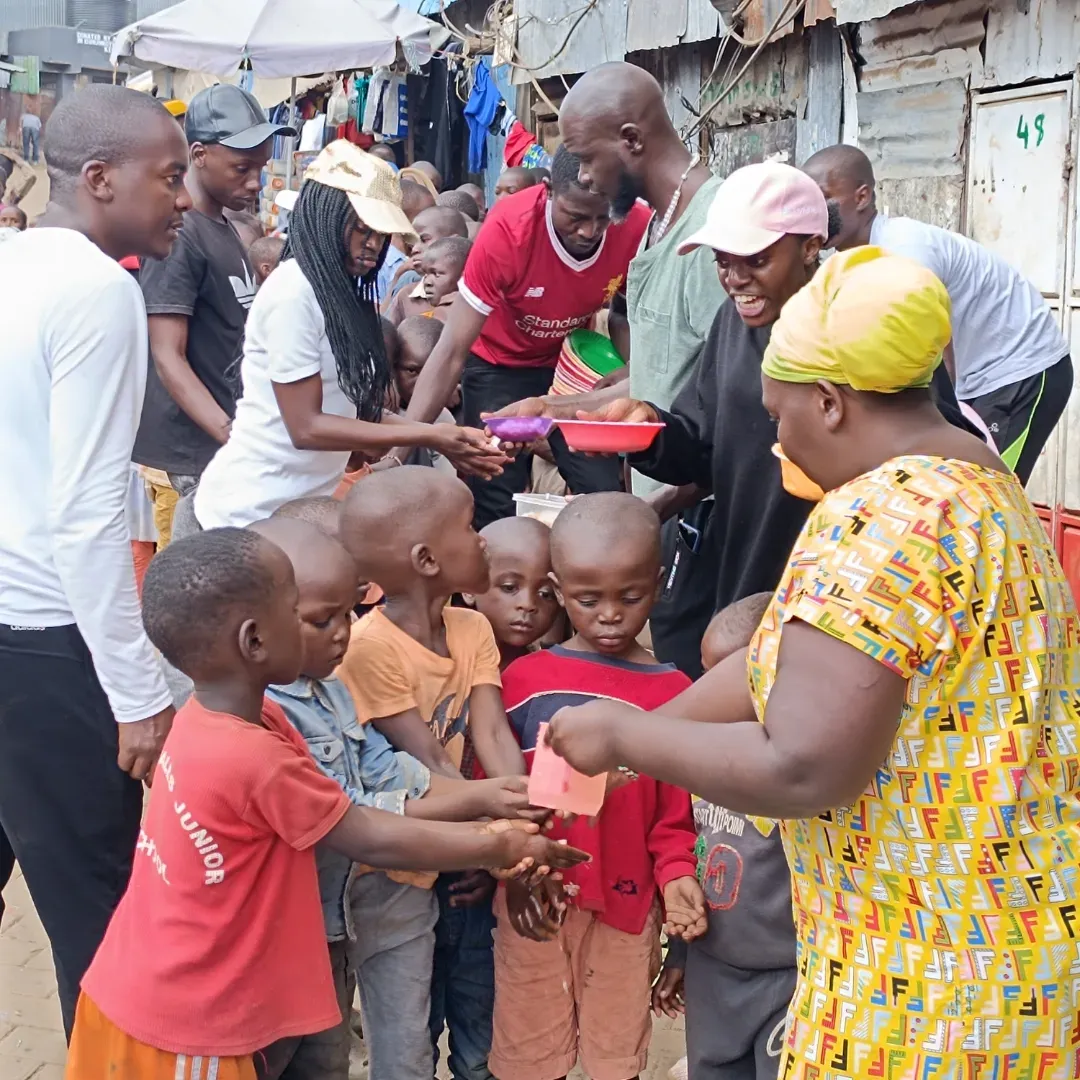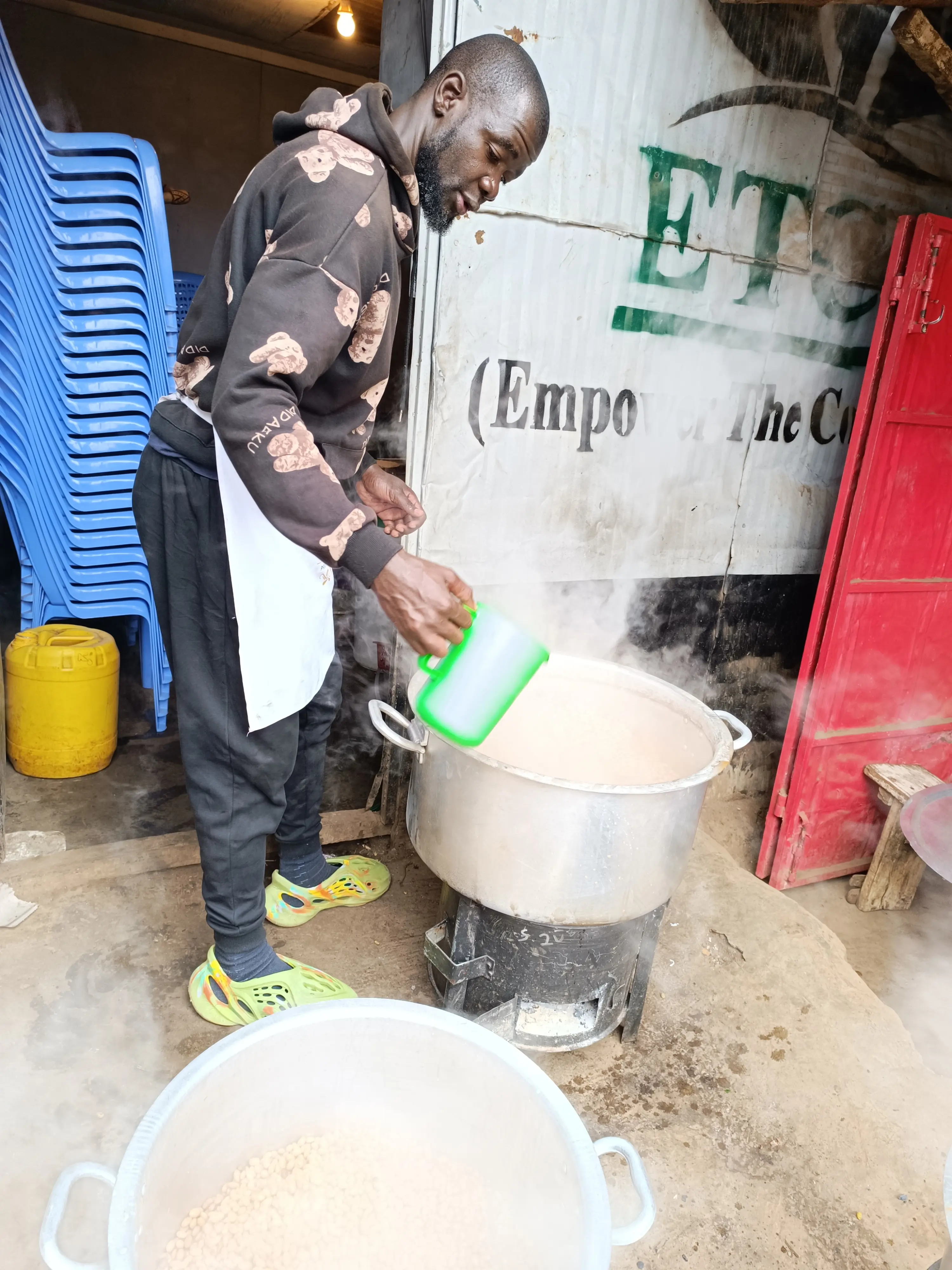
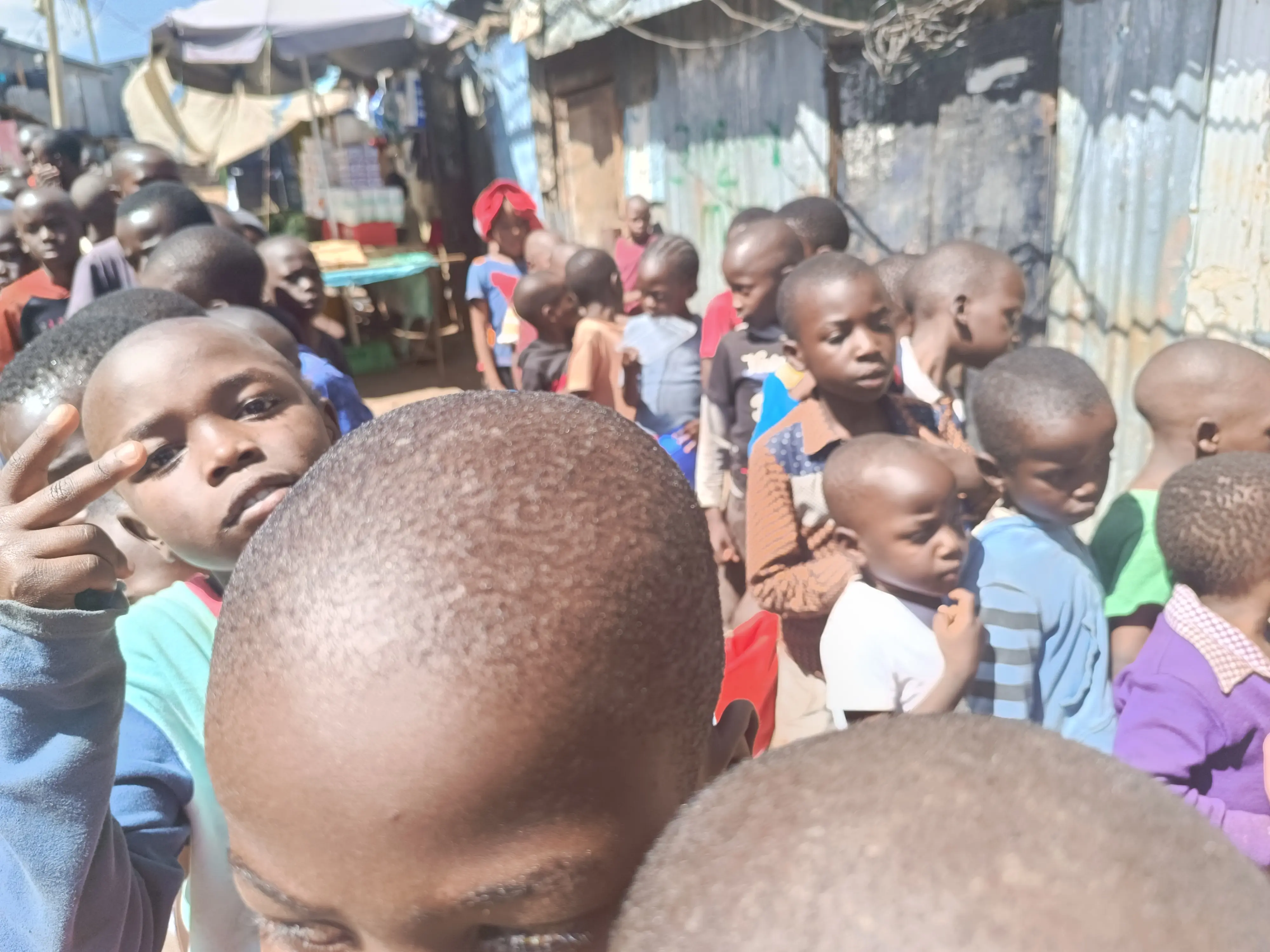
Clouds stacked over Kibera like unpaid bills, and the wind carried a chill that made jackets feel thin. Rain was not a surprise; it was a promise. Still, the cooking fire caught, and the smell of warm food cut through the damp.
Bad weather changes logistics — tarps, earlier serving times, careful footing on slick paths — but it does not change the commitment. The children’s feeding programme ran because hunger does not pause for a forecast.
Children arrived with sweaters too thin for the breeze; steam from the pot made small clouds under the shelter. Someone joked that Nairobi cold is not cold until you have stood in line holding a metal plate — then everyone laughed because it was true. We served quickly, knowing the afternoon could turn worse before dark.
Seasons will shift; Saturdays remain. If you can help cover extra charcoal on cold weeks or waterproof storage for supplies, you are strengthening something that refuses to be weather-dependent.
After eating, some children linger just to stay dry — homework scribbled on a knee, shoes lined up near the door like a small fence. We clear space because cold rain should not mean cold neglect; if you have spare sweaters in good condition, we can pass them on with dignity.
Our team shows up earlier on grey Saturdays because reliability is part of care — children should not have to guess whether lunch is real. If you want to stand with us through the cold snaps, sponsor thermoses or a bulk tea purchase; small warmth travels far.